
Lobster rolls are everywhere these days, including McDonald’s, gas stations, and even landlocked states at places like the Iowa State Fair and stadiums like Citi Field. Some of them are good, but most of them are pretty disappointing if you’re from the coast.
The problem is that while you can find them anywhere, their quality varies widely, and so does the preparation and meat quality. If you’re going to spend your money on a quality sandwich, it needs to be something worth eating. Too much mayo or butter can create a soggy bun instead of a toasted, crispy one, and the same with too many filler ingredients like celery that take space vs. complementing the sandwich with crunchy textures.
That’s where we come in as we’ve been experts on the subject of quality lobster rolls since we opened shop online in 1999. Whether you’re making a lobster roll at home or are on the road and get a craving, here’s what to know before assembling your own and to look at before paying $20, $50, and sometimes more for a vendor that is all filler and no flavor.
1. Mediocre Lobster Meat
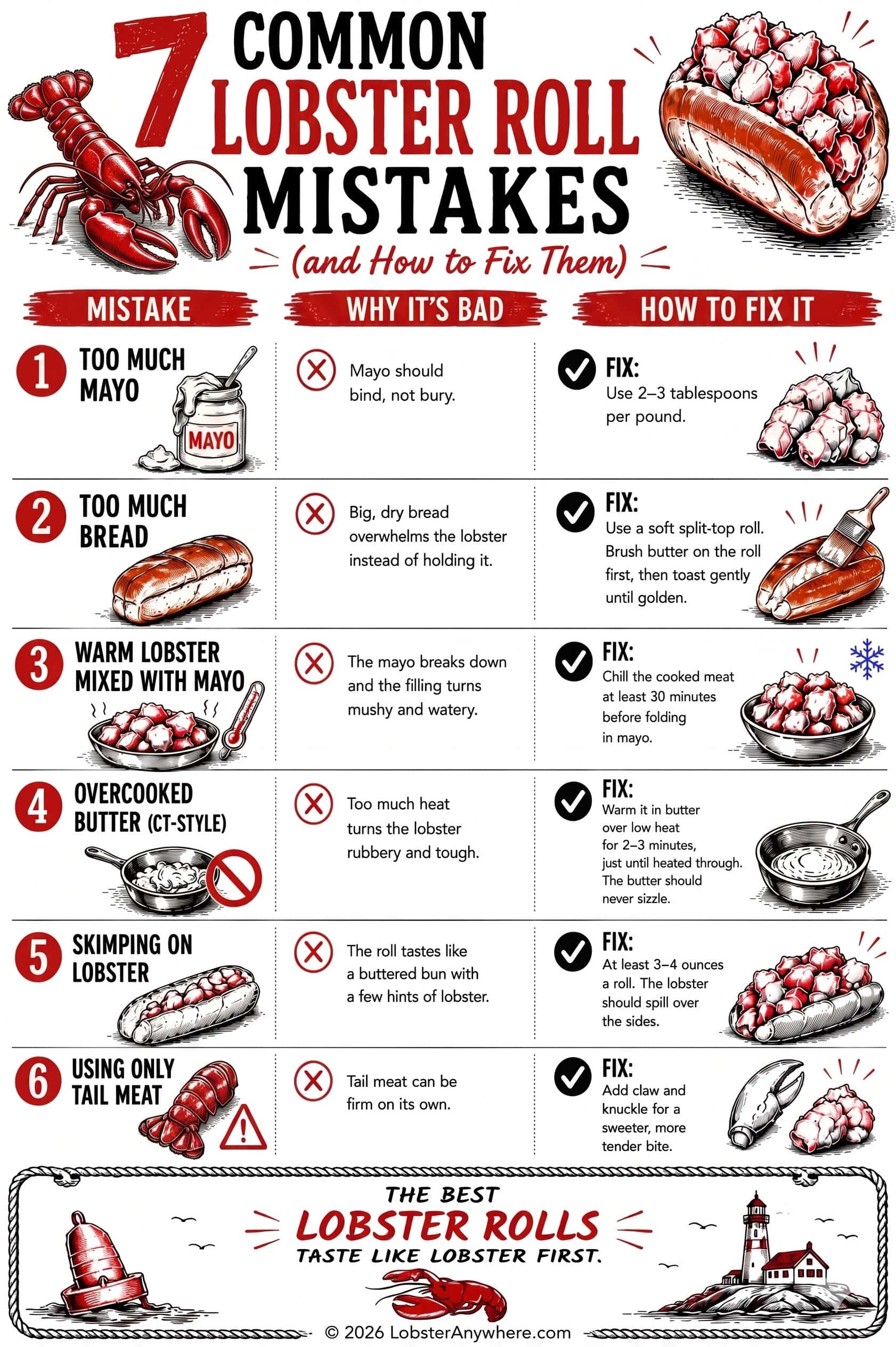
The meat is the most important part, but plenty of places cut corners by using other animals, proteins, or imitation lobster meat. This doesn’t only apply to lobster roll sandwiches; 8 restaurants in San Diego were convicted of fraud for using crawfish or pollock instead of lobster. In addition to being a real lobster, the type of lobster will impact the taste and texture of your lobster roll.
Look to see if there is claw meat, as people in front of or around you purchase it, and whether it is on the menu. Maine lobsters have a sweeter flavor and added texture from the claw and knuckle meat, creating that signature oceanic lobster roll taste. Spiny lobster species like the Florida, Caribbean, and California lobsters are rock lobsters or langostinos, which may be similar but are all tail and lack the sweetness and texture variety. If you don’t see claw meat, you shouldn’t be paying a premium as you’re not getting the signature texture and flavor you expect.
Pro-tip: Fresh meat is best as it stays firm and a little springy, and this can only come from a live lobster. It should never feel mushy or smell like ammonia. The next best thing is high-quality, freshly frozen lobster meat from a trusted retailer.
2. Using All Tail Meat
Some places use tail meat exclusively because it looks fancy, you can get larger chunks in every bite, and it may be cheaper in warmer climates where Spiny lobsters live. Tail meat is actually too firm for a roll, and this firmness is what makes it a good option for grilling or steaming instead. As you sink your teeth in, you’re going to get chewy and somewhat tough bites vs. a smooth and easy slice with the claws, knuckles, and tails from Maine Lobsters.
The classic roll flavor also relies on a mix of tail meat with claw and knuckle meat because those parts are sweet and tender adding to the flavor profile and mouth feel. If you use only tail meat, the texture and taste of each bite will be off and less satisfying.
3. Skimping on Portions
Portions matter, as some vendors will use the stigma that lobster is a delicacy, which it is, to up the price or decrease the amount of meat per roll. Before you click to pay, ask how many ounces of actual lobster meat are on each roll. A traditional lobster roll will have between three and four ounces of meat, then the filler ingredients like celery and lettuce. The lobster should be spilling out of the bun. If it disappears into the bread, you are wasting your money.
4. Overdressing the Filling
Mayo is not an expensive ingredient for restaurants, and we don’t always measure our spoonfuls when prepping food at home. Too much mayo can overpower the lobster’s flavors and accents like lemon juice, and it can soak into the bun, overpowering it as well.
A good rule of thumb is to use a couple of tablespoons (three maximum) for one pound of lobster meat. This helps to ensure the lobster is what you taste, vs. the dressing. With this ratio, the dressing just helps it along.
If you want to swap the classic mayo dressing, our guide to the best lobster sauces breaks down lighter options like garlic aioli that won’t overpower the meat.
5. Choosing the Wrong Bun
The bun can ruin the whole meal. You want a top-split brioche roll. It needs to be strong enough to hold the meat but soft when you bite it. The sides let you heat up the outside while the inside stays cool, and the flat tops allow the lobster meat to pile up and over giving the visual appeal of a full lobster roll sandwich. Just don’t over-toast it. If the bun is hard or charred, it ruins the lobster’s soft texture. Just warm it through without overcooking it.
6. Over-Toasting the Bun
A charred, hard bun doesn’t make anything better; it just fights with the lobster. Toast it just enough to warm it through and give it a little structure. If you want to add flavors that complement lobster meat, like garlic and thyme, baste the inside with a bit of herb-infused garlic butter to toast and warm.
7. Adding Too Many Competing Flavors
Extra flavors can quickly overpower the lobster roll. Go sparingly, choosing one crunch element, such as celery or lettuce, and one primary herb, such as thyme or tarragon. A lobster roll is simple; if you start adding all those garnishes, you are making a different kind of sandwich.
Lobster rolls are a simple sandwich to make, and a classic flavor that doesn’t need much. Just remember your proportions like three to four ounces of meat per sandwich, include claw, knuckle, and tail meat for all the textures and flavors, and don’t add too many toppings or fillers, as this will overpower the lobster flavor and texture. If you want a foolproof way to make lobster rolls at home, or don’t want to pay expensive restaurant prices, click here to buy our fresh lobster roll kits.