
You split the tail, and there it is. A black line running down the middle of the meat or a green glob. From there you’re likely wondering if it is edible, has the lobster gone bad, is it sanitary, and what exactly is it?
We’ve been shipping Maine lobster since 1999 with more than 900,000 packages out the door. We get a few of these calls a month, and they cluster around the holidays when a lot of people are cooking lobster at home for the first time. Nine times out of ten the answer is the same, “that’s just the lobster”.
Lobsters are wild animals and what’s inside changes with sex, age, what it ate last, and how long ago it ate. Most of what surprises people is normal anatomy and not a sign that it has gone bad. Finding a color like black, green, white, or red does not mean the lobster is spoiled, sick, or defective.
Here’s how to tell what you’re looking at, what to pull, when to rinse the meat, and what you can leave alone in a quick overview. After we jump into what each is, how to remove it, and if you may want to keep the colored substance you find and why.
| What you see | What it probably is | What to do |
| Thin black, brown, or greenish line | Intestinal tract (sand vein) | Pull it out and rinse the groove |
| Dark green, brown, or nearly black jelly | Uncooked roe | Cook it through or remove it |
| Bright red or coral material after cooking | Cooked lobster roe (eggs) | Edible, cook and eat it or scrape it off |
| White, clear, or chalky gel | Cooked hemolymph | Harmless, wipe away if desired |
| Soft green paste | Tomalley (digestive glands) | Remove and discard |
| Thin white cord on the underside | Connective tissue or nerve cord | Harmless, pull if the texture bugs you |
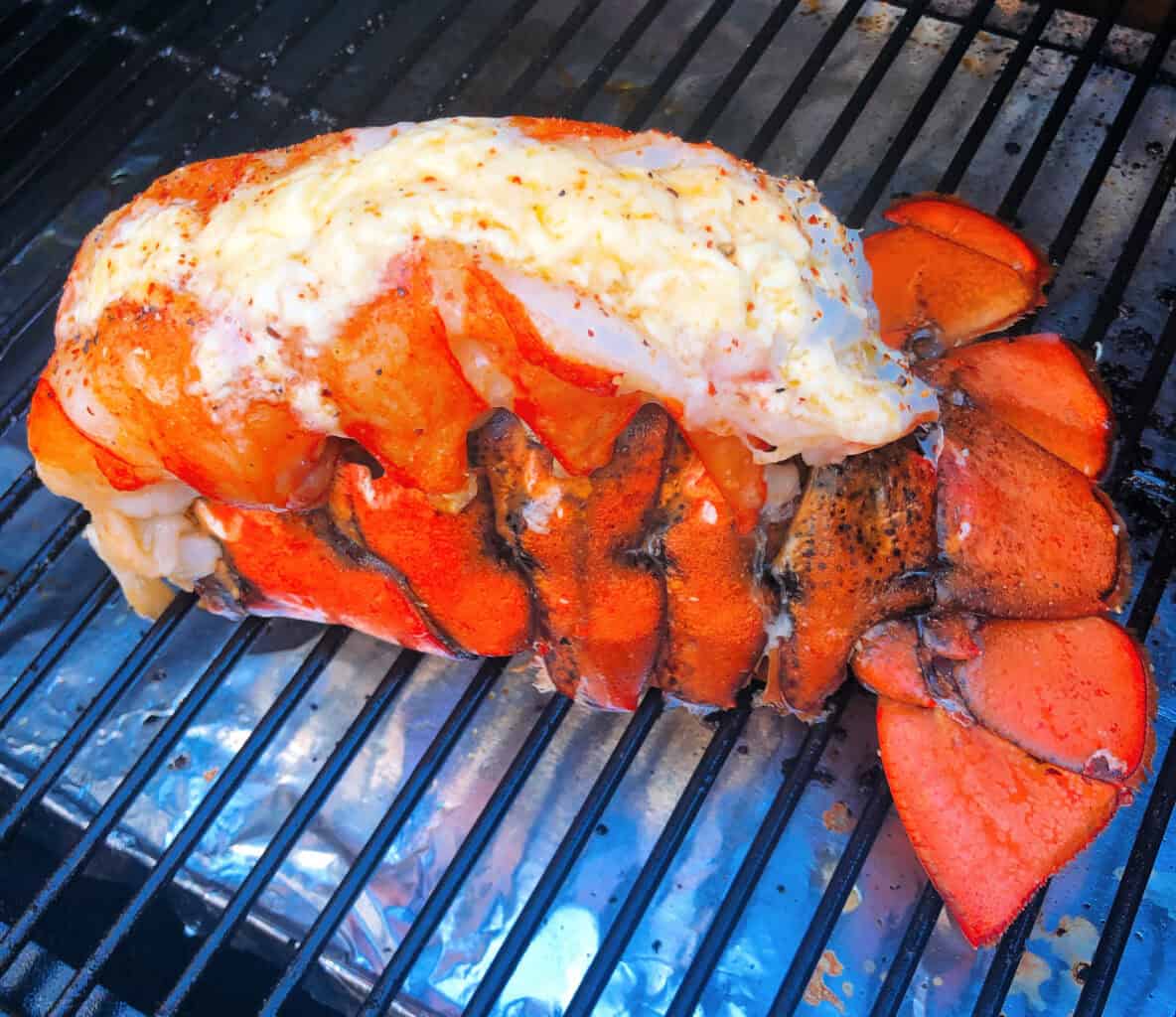
What the Black Line in Your Lobster Tail Is
That black line running along the top of the tail meat is the lobster’s intestinal tract. People call it the sand vein, but it isn’t a vein at all.
The tract runs the length of the abdomen and ends near the base of the tail fan. It can hold partially digested food, sand, grit, and bits of shell. So yes, it’s the lobster’s poop chute, and it isn’t always jet black.
Two things determine the color:
- What the lobster ate last.
- How long it sat in a holding tank before it was cooked.
A lobster held in clean seawater for a stretch runs its tract close to empty whereas one that hit a bait bag of herring the night before it was trapped will show a dark, full line. Depending on which you get, the tract can look:
- Black or dark brown if it just ate.
- Greenish brown if it ate recently and has started processing the food.
- Light gray if it has been in the tank without food and has processed most of the last meal.
- Nearly clear, or empty if it has been in the holding tank and processed the last meal.
A dark, full tract doesn’t mean anything is wrong with the lobster. It tells you the lobster fed shortly before it was trapped. That’s all. Nothing in there will hurt you, and plenty of people eat lobster without ever removing it, including in fine dining restaurants where you order a whole lobster.
If the meal calls for tail only, most cooks pull it before serving because it can carry grit and leave a muddy, bitter aftertaste. It only takes about five seconds to remove once the shell is open, so its an easy way to have a cleaner presentation.
How to remove the black line from the lobster tail
- Separate the tail meat gently along the top.
- Find the narrow line running lengthwise through the shallow groove.
- Lift it with the tip of a paring knife, a seafood pick, or your fingers.
- Pull slowly so it comes out in one piece.
- Rinse the groove under cold water for a few seconds and then pat the meat dry.
Pro-tip: Don’t soak the meat as you’ll wash away the flavors. A quick rinse does the job.
Steps to remove the black line from a whole and unsplit tail
Poaching a whole tail, or cooking it sous vide? You can pull the tract without cutting the shell open.
- Flex the tail to open the soft membrane between two shell segments near the back end.
- Slide a toothpick or thin skewer in just under the top surface and lift. The tract catches on the skewer.
- Grab it and draw it out through the gap.
This is the same trick people use to de-vein a shrimp without butterflying it.
Why Bait and Bottom Food Can Still Be in There
Dealers don’t feed lobsters during short-term holding. The Massachusetts Division of Marine Fisheries handling guide says to leave food out, because uneaten food and waste foul the holding water. The same guide calls for fasting lobsters at least three days before shipment. A fed lobster nearly doubles its oxygen consumption, and it stays elevated for three or four days after the meal.
Fasting is about oxygen, waste, and surviving the trip, not about guaranteeing an empty gut. Lobster digestion is slow to begin with, and cold water slows it down further.
Researchers at Memorial University fed American lobsters blue mussels and tracked how long a single meal took to clear, publishing the results in the Journal of Crustacean Biology.
Their estimates are:
- About 69 hours (2.89 days) at 59°F
- About 133 hours (5.5 days) at 50°F
- About 252 hours (10.5 days) at 41°F
The authors noted that food moves through a lobster considerably slower than through most other decapod (10 legged) crustaceans.
Commercial holding systems run roughly 40 to 50°F, per the same Massachusetts guide. So a meal eaten before the trap came up, herring bait included, can still be sitting in the tract days later, even though nobody fed that lobster once it hit the pound. The study used mussels rather than bait fish, so treat the hours as a rough range. That’s the whole explanation for a dark, full sand vein. You’re looking at a timeline, but what about the green stuff?
What Is the Black or Dark Green Jelly?
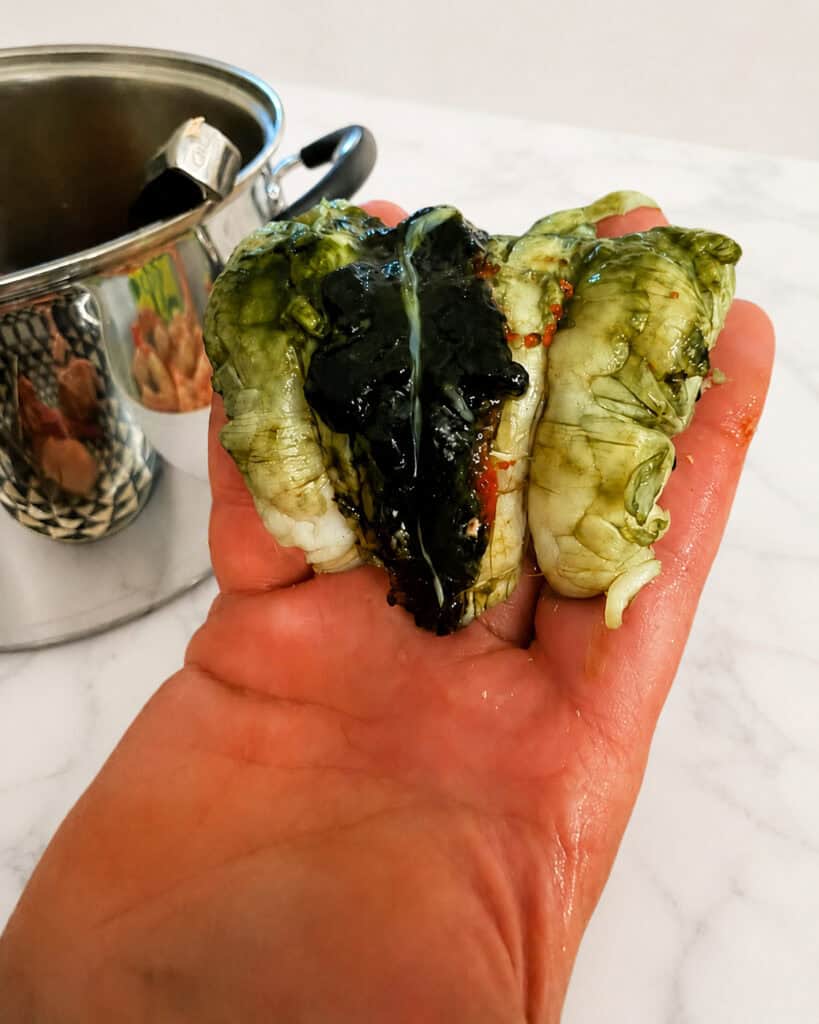
Not everything dark in a tail is the tract. A bigger, thicker, gelatinous mass, that is clustered instead of running in a narrow line, is uncooked roe (eggs). Only female lobsters have it, and it can run from the body cavity up into the top of the tail.
Raw roe looks rough and can be dark green to brown to nearly black. That’s normal, and it is not a sign of rot. When cooked thoroughly it firms up and turns red or coral. Some people enjoy this texture as part of the meal and get excited when they find corals in their lobster dinner.
Pro-tip: When cooking a lobster tail, black roe could be a sign the tail is undercooked. Once the tail and roe are cooked they’ll be a reddish and orange color. With that said, a thick mass of roe can lag behind the meat around it when cooking, so the roe can still be dark when the tail ,meat is done.
What Is the Green Stuff Inside a Lobster Tail?
Soft green or olive paste is tomalley, the lobster’s hepatopancreas. It does the work a liver and pancreas do in other animals and years ago was prized as a lucky treat due to its creamy texture and rich flavor boost on the lobster meat.
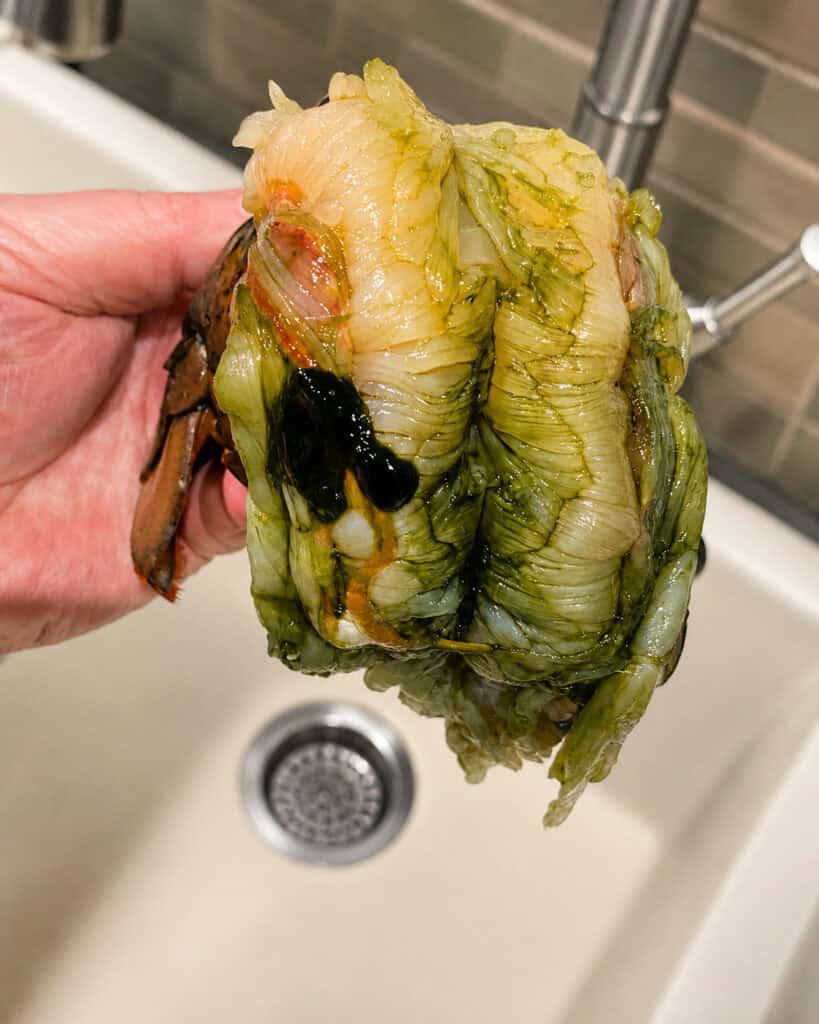
Tomalley sits mainly in the body cavity, though some spreads toward the base of the tail when a lobster gets split or cleaned. It usually shows as localized dark green or brownish-green smearing rather than an even coating.
The green color is natural and does not mean that the meat has spoiled or is going bad. Maine health officials advise against eating tomalley, but this recommendation has nothing to do with the color as the color is not a sign of spoiled meat.
The tomalley filters the lobster’s blood the way a liver does. Whatever is in the water gets concentrated and parked there over a long life including PCBs, dioxins, mercury, and the biotoxins behind paralytic shellfish poisoning. Cooking doesn’t break those down regardless if it is boiling, steaming, baking, or grilling, and this is why some health officials now advise against eating the tomalley. But that does not mean the meat is bad or you need to throw the lobster tail away.
Maine’s advisory that covers the tomalley stops at the warning. In fact older and some modern cookbooks like Jasper White’s Lobster at Home that features “Hot Tomalley Toasts” and plenty of old-timers in New England treat tomalley as the best part of the lobster. With that said, we don’t suggest eating it.
What to do with tomalley
When you get tomalley in your lobster:
- Scrape it out and throw it away.
- Rinse the residue off the meat.
- Cook and serve the lobster.
Green stained meat from tomalley does not mean the lobster went bad, just scrape, rinse, cook, and enjoy your meal.
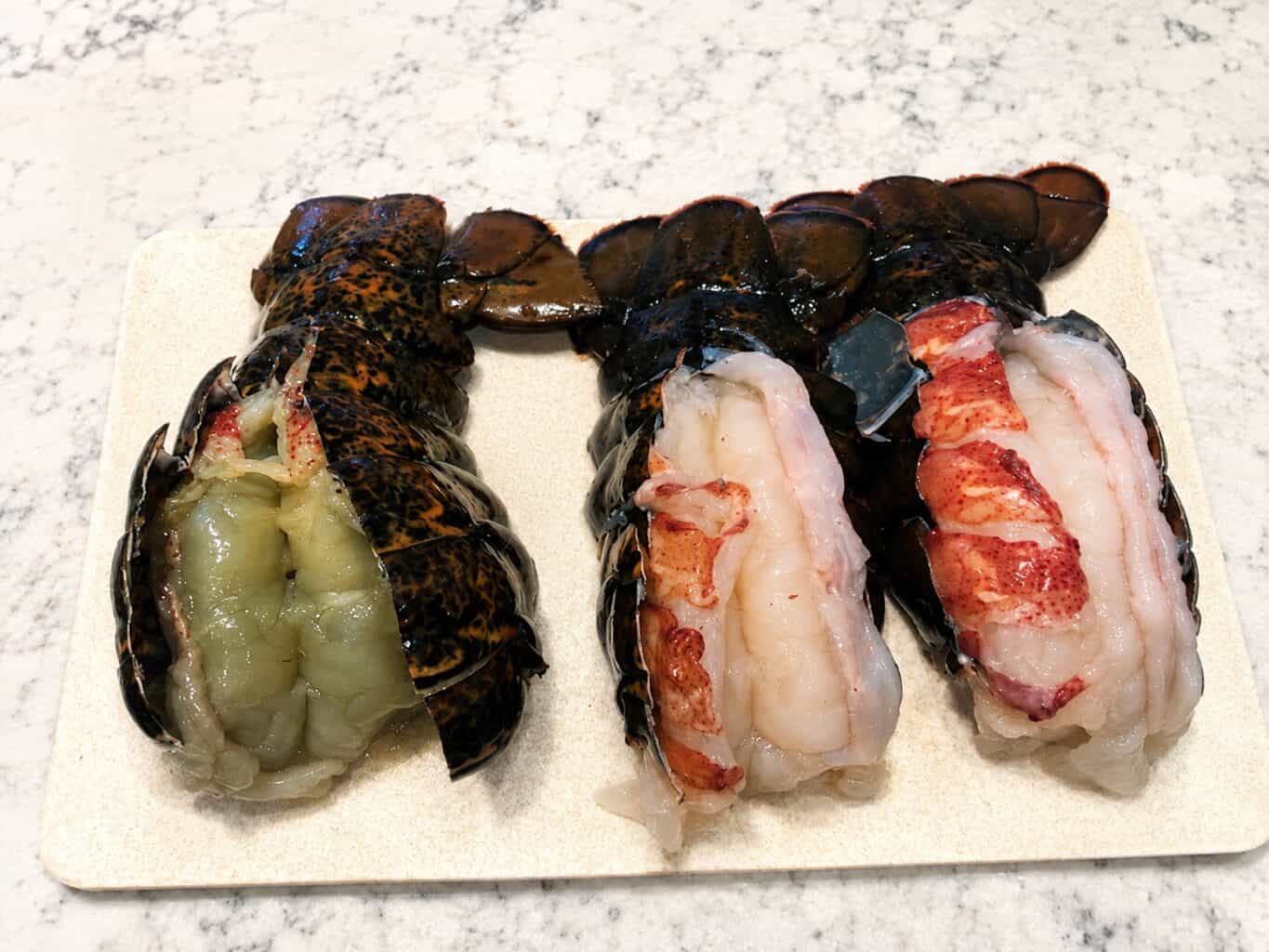
Finding a black line, brown, green, or black orbs, or even green paste in your lobster tail or meat does not mean the lobster is bad. It is just part of the lobster and easy to take care of. If you still have questions about the vein, tomalley, or other parts, leave a comment below and we’ll be happy to help. It may even turn into an FAQ like the following customer questions.
FAQs About Black and Green Stuff in Lobster Tails
Bright roe, a dark digestive tract, white hemolymph, or green tomalley are ways to tell you about the animal itself. A tail can have all four and be in perfect shape.
The narrow digestive tract
Dark uncooked roe
Red cooked roe
White coagulated hemolymph
Green tomalley
Nerve or connective tissue
They look strange the first time you take apart a whole lobster, but they’re still just parts of a wild animal.
If you find something clearly worm-like or segmented, or something that doesn’t match anything on this page, don’t shrug it off. Contact whoever sold you the lobster.
Hopefully you’re now ready to enjoy your lobster dinner without worry about finding green or black things inside. And if you’d like the freshest lobster around, click here to order our live Maine lobsters, here for our fresh lobster tails, and here for our pre-shucked lobster meat if you don’t want to have to clean the black and green stuff yourself.
THANK YOU FOR A GREAT EXPLANATION OF ITEMS THAT I HAD QUESTIONS ABOUT, THY WEREE CLEAR CONCISE, EASY TO FOLLOW AND UNDERSTAND. YOU DID A GREAT JOB!
You are welcome! We get this question a lot about the stuff inside lobsters and just want people to know they are not bad. They are live, wild creatures and caught in the North Atalantic.