
The best way to cook lobster tails is to steam them for 6-8 minutes for tender, pure flavor; bake them at 350°F for 10-15 minutes for even cooking; or to boil them for 5-7 minutes in salted water for speed. Make sure to cook them until the internal temperature reaches 135-140°F for restaurant-quality tenderness. There are a few other methods that allow you to control the flavors and textures, and that is where we can help.
Below you’ll find more details including what each cooking method does to the texture and flavor of the meat, how long to cook each lobster tail by weight, and the steps to cook lobster tails by method.
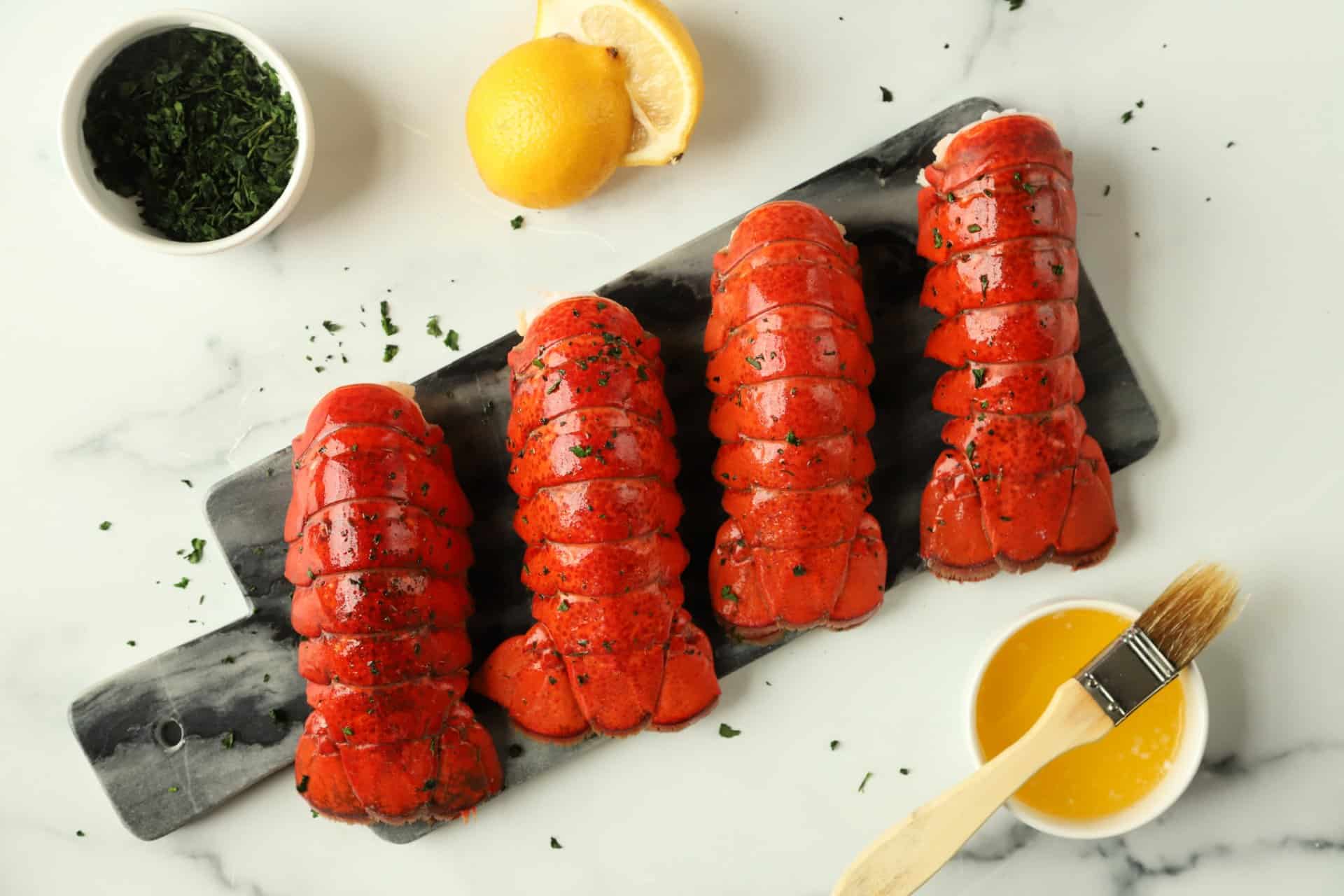
From the LobsterAnywhere team: We’ve been shipping lobster nationwide since 1999 and helping customers choose, prepare, and cook tails in sizes ranging from smaller portions to jumbo and monster tails. This guide reflects the practical questions we answer every day. Learn more about LobsterAnywhere.
How Long to Cook Lobster Tails by Size and Method
Here is what each method of cooking lobster tails does to the meat and texture, as well as the skill level required.
- Steaming is the most tender and purest meat flavor, beginner-friendly.
- Grilling provides smoky, char-kissed taste, beginner-friendly with grill open, medium with grill closed.
- Boiling reduces the briny flavor but keeps the sweet, and rich taste, beginner-friendly with a timer.
- Broiling the tails gives a sweet, rich, and slightly briny flavor to the meat, easy-to-medium difficulty.
- Baking gives the meat a sweet, briny, and bold flavor, beginner-friendly.
- Air frying tails gives a briny and sweet but not rich or bold taste, beginner-friendly.
The time will depend specifically on the amount of meat or weight of the lobster tail.
| Method | 4 oz | 6–7 oz | 8–10 oz | 12 oz | 16–20 oz | 20–24 oz |
| Boil | 4–5 min | 5–7 min | 7–9 min | 9–11 min | 12–15 min | 14–18 min |
| Bake (see notes) | 10–12 min @ 350–375°F | 10–12 min @ 350°F | 12–15 min @ 350–375°F | 15–18 min @ 350–375°F | 18–22 min @ 375–400°F | 20–24 min @ 375–400°F |
| Broil (High) | 4–6 min | 4–6 min | 6–8 min | 8–10 min | 10–12 min | 12–14 min |
| Steam | 3–5 min | 6–8 min | 8–10 min | 10–12 min | 12–14 min | 14–16 min |
| Grill (two-zone) | 3–5 min total | 6–8 min total | 8–10 min total | 10–12 min total | 12–14 min total | 14–16 min total |
| Air Fry (~380°F) | 3–5 min | 6–8 min | 6–8 min | 8–10 min | — | — |
Quick tip: Smaller lobster tails cook quickly, while jumbo and monster tails need more time for heat to reach the thickest part of the meat. Always use the time range as a guide and confirm doneness with a meat thermometer before serving.
Make LobsterAnywhere a Preferred Source on Google
Get more LobsterAnywhere cooking tips in your Google results. Use the button below to add us as a preferred source.
How to Prepare Lobster Tails Before Cooking
Regardless of boiling, baking, grilling, or poaching your lobster tails, you’re going to want to let them thaw first, then clean and prep them.
How to Thaw Lobster Tails
For the best texture, thaw lobster tails completely before cooking. Thawing in the refrigerator is the easiest and most even method. If you are short on time, a cold-water bath works well. Avoid warm or hot water, which can begin cooking the outside while the center is still frozen.
Refrigerator Thawing (Best Method)
Keep the lobster tails sealed and place them on a tray in the refrigerator to catch any drips. Thaw until the tails are completely flexible, then pat them dry before cutting or cooking.
- 4-6 oz tails: 8-12 hours
- 8-10 oz tails: 12-24 hours
- 12-20 oz tails: 24-36 hours
- Very large tails: Allow up to 36-48 hours
Quick Cold-Water Thawing
Keep the lobster tails in a sealed bag and submerge them in cold water. Change the water every 15-30 minutes until the tails are flexible and completely thawed.
- 4-6 oz tails: 30-60 minutes
- 8-20 oz tails: 1-2 hours
How to Prep Lobster Tails for Cooking
Once your lobster tails are thawed, it’s time to prep them.
- Rinse the shells under cold water (not warm or hot) to remove grit and shell fragments, but do not soak them. Once done, pat them dry.
- Cut the shell open to expose the meat using the butterfly, piggyback, or fan-cut methods (depending on how you’ll be cooking the tail). This helps the meat release from the shell more easily once cooked.
- Steaming and boiling – Leave the shells intact to retain moisture and flavor.
- Broil, Bake, or Air Fry – Butterfly or piggyback for faster cooking and a nicer presentation.
- Grilling – Split lengthwise or piggyback for more surface area and light char.
- Clean the vein (the black streak down the center) by sliding a knife under it and skewering it to lift it out. Give the meat a quick rinse under cold water (do not soak or scrub), and a quick pat dry.
- Season the meat with sea salt and pepper to taste.
Fun fact: You may find three colors or textures in the tail that are not part of the meat:
- The black line is the digestive tract, which is safe to eat but can be gritty, so most people remove it.
- Green goop (tomalley) which has a rich, briny flavor. While it is sometimes eaten, many public health advisories recommend limiting or avoiding tomalley because it can accumulate contaminants.
- Roe (eggs) may appear on a lobster tail as black dots when raw and turn coral-red when cooked. They are edible, so if you like them, keep them and enjoy. If not, discard them.
For photos and a more detailed explanation, see our guide to the green, black, and red material inside lobster tails.
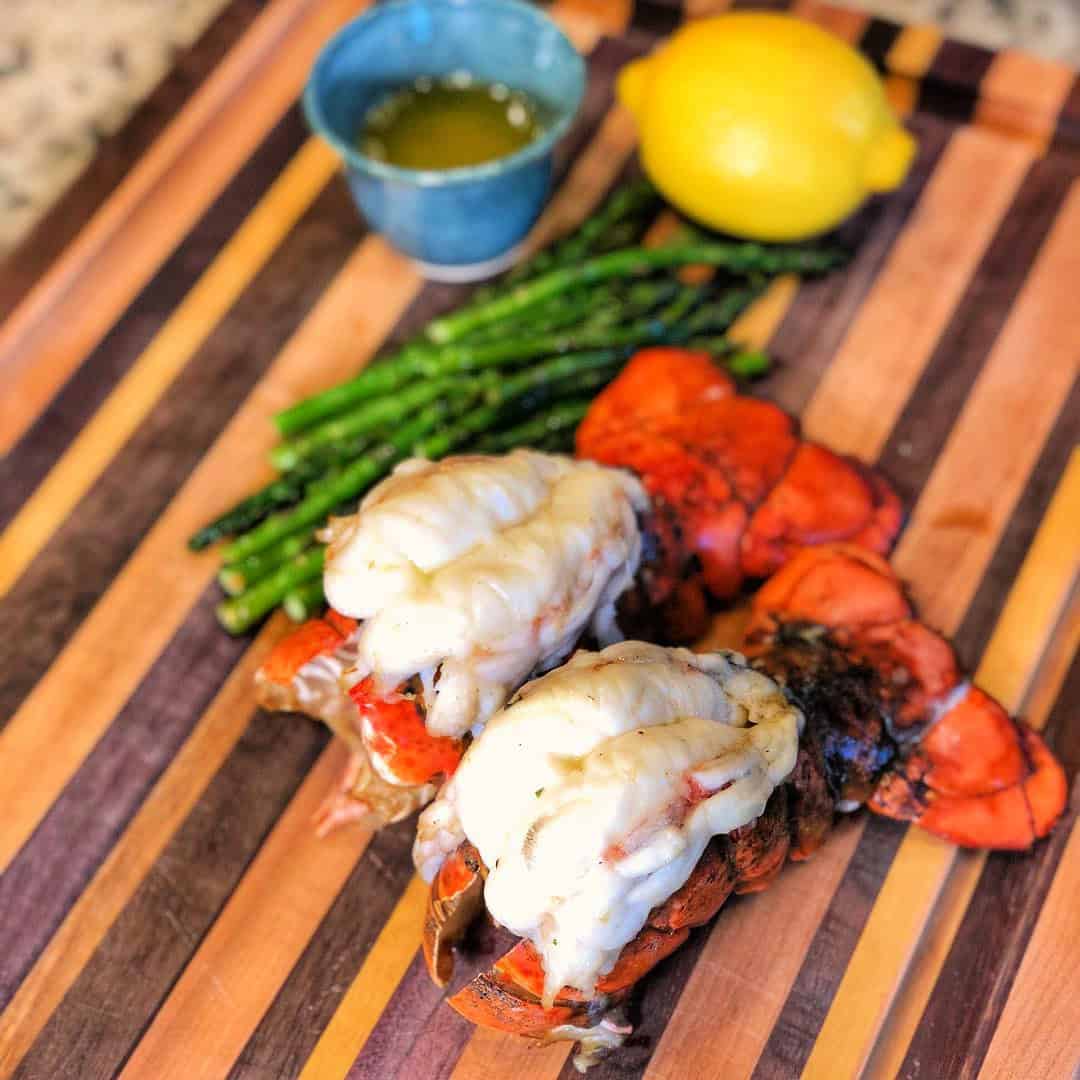
Each Way to Cook Lobster Tails
There’s no right or wrong way to cook your lobster tails; you’ll just want to make sure the internal temperature reaches the right temperature so it is safe to eat. This starts with knowing when the lobster tails are done cooking.
How to Tell When Lobster Tails Are Done
Use time as a guide, but let temperature and texture make the final call. For tender, juicy lobster, check the thickest part of the tail meat and pull it at about 135–140°F, then let it rest briefly as the temperature continues to rise. The FDA recommends 145°F for seafood. For thermometer placement, carryover cooking, and visual cues, see our complete lobster doneness guide.
The signs to look for include:
- The meat is opaque and pearly white throughout, with no translucent center.
- The texture feels firm and springy, not soft, mushy, or rubbery.
- The shell turns bright red-orange. Use shell color as a supporting cue, not the only test.
- A curled tail can be a useful clue with shell-on methods like boiling, but butterflied and piggyback tails may not curl the same way.
Now that you know what to look for, here’s how to cook them following the most popular methods.
How to Steam Lobster Tails
Steaming is one of the gentlest ways to cook lobster tails and helps preserve their sweet flavor and moisture. A 6-7 oz tail generally takes about 6-8 minutes once the steam is strong. For a deeper walkthrough, see our complete guide to steaming lobster tails.
To steam lobster tails:
- Bring 1″ of water to a vigorous boil.
- Place tails in a basket or a rack and cover tightly.
- Steam until the meat is opaque and firm and the thickest part is cooked through. Use the cooking-time chart above for the tail size you are preparing.
- Serve immediately with melted butter and lemon.
How to Grill Lobster Tails
Grilling gives lobster tails a lightly smoky flavor and a little char without hiding the sweetness of the meat. A 6-7 oz tail generally takes about 6-8 minutes total using two-zone heat. For step-by-step grill technique and photos, see our grilled lobster tail guide.
To grill lobster tails:
- Preheat the grill to medium-high and set up two-zone heat.
- Butterfly or piggyback tails and then pat dry and brush with oil.
- Start shell-side down over indirect heat, and baste with butter.
- Finish the meat-side down for 30-60 seconds over direct heat on the other zone to create a light char.
- Rest 1–2 min and serve with melted butter and lemon.
How to Boil Lobster Tails
Boiling is simple, fast, and useful when cooking several tails at once. Keep the shells intact to protect the meat, and start timing after the water returns to a boil.
Pro tip: Want your lobster tails to stay straight instead of curling in the pot? Run a long metal skewer lengthwise through each tail before boiling.
To boil lobster tails:
- Fill a large pot with salted water and bring to a rolling boil.
- Add the lobster tails and start timing once the water returns to a boil.
- Cook according to the timing chart above. As a quick reference, 6-7 oz tails usually take 5-7 minutes and 8-10 oz tails about 7-9 minutes.
- Remove the tails and dip them briefly (10-30 seconds) in an ice bath to prevent carryover cooking.
- Drain, split, and baste with warm garlic butter, lemon, and herbs before serving.
Pro tip: At higher elevations, water boils at a lower temperature, so plan for a bit more time (1-2 minutes) and verify doneness with a thermometer and visual cues.
How to Broil Lobster Tails
Broiling uses intense top heat to cook a butterflied lobster tail quickly while lightly browning the exposed surface. A 6-7 oz tail usually takes about 4-6 minutes, but watch it closely because broilers vary. If you want a cleaner presentation, see our step-by-step guide to butterfly lobster tails.
To broil lobster tails:
- Set the oven to High Broil and place on a rack 6-8″ from the heating element.
- Butterfly the tails and brush the exposed meat generously with butter.
- Broil until the meat is opaque and cooked through, using the size chart above as your timing guide.
- Rest for 1-2 minutes then drizzle with butter and lemon.
How to Bake Lobster Tails
Baking is a forgiving method that works especially well when you want to season the exposed meat with butter, herbs, garlic, or spices. A 6-7 oz tail generally takes about 10-12 minutes at 350°F.
To bake lobster tails:
- Heat oven to 350°F.
- Butterfly or piggyback tails and brush them with butter.
- Bake until the meat is opaque and cooked through. Check the chart above for approximate time by tail size.
- Rest 2 minutes, then baste again with butter and serve.
Pro tip: For larger tails (12 oz+), bake at 375-400°F and check the center carefully. If you are cooking 10-20+ oz tails, see our guide to cooking jumbo and monster lobster tails.
How to Air Fry Lobster Tails
Air frying is a quick option for smaller and medium-sized lobster tails. It works best when the tails fit in a single layer with room for hot air to circulate. A 6-7 oz tail generally takes about 6-8 minutes at 380°F.
To air fry lobster tails:
- Preheat the air fryer to 380°F.
- Butterfly or piggyback tails, pat them dry, and brush with butter or oil.
- Add any seasonings or spices.
- Arrange the meat side up in a single layer.
- Cook until the meat is opaque and cooked through, checking early because air fryers can vary.
- Baste with butter during the final minute.
- Rest 1-2 minutes.
The best method comes down to the result you want. Steam for tenderness, grill for light char, boil for simplicity, broil for fast browning, bake for an easy oven method, or air fry for speed. Use the chart below as a quick comparison when deciding how to cook your tails.
Lobster Tail Cooking Cheat Sheet
| Method | Pros | Cons | Ideal For | Approx. Time (6–7 oz) |
| Boiling | Simple, even cooking and easy timing | Can dilute flavor slightly | Speed and simplicity | 5–7 min |
| Steaming | Tender texture and pure, sweet flavor | Needs a steamer basket or rack | Maximum tenderness | 6–8 min |
| Baking (350°F) | Even cooking and easy seasoning | Slower than high-heat methods | Consistent oven cooking | 10–12 min |
| Broiling (High) | Fast and lightly browns the surface | Easy to overcook if left unattended | Butterflied presentation | 4–6 min |
| Grilling (two-zone) | Smoky flavor and light char | Can stick or overchar if the grill is too hot | Outdoor cooking and gatherings | 6–8 min |
| Air Fry (~380°F) | Fast cooking with a lightly browned surface | Limited by basket size | Small and medium-sized tails | 6–8 min |
Need lobster tails for dinner? Shop our select of lobster tails that ship and deliver overnight, with sizes ranging from smaller individual portions to jumbo and monster tails.
Lobster Tail Cooking FAQs
How to cut a lobster tail before cooking?
Choose the cut based on presentation and cooking method. Butterfly or piggyback work well for broiling, grilling, and air-frying. Leave tails whole for boiling to reduce water uptake and preserve flavor.
How do chefs prepare lobster tails?
Pros lean on gentle heat (steaming or careful broiling/grilling) and precise temps. Many chefs butterfly or “piggyback” for even cooking and finish with warm butter, avoiding overcooking.
Can you cook tails from frozen?
Yes, you can cook a frozen lobster tail via boiling or steaming from frozen. For optimal texture, thaw in the refrigerator for 12 to 24 hours depending on size, when possible. Do not grill frozen lobster tails as the meat will become rubbery.
How much lobster tail per person (oz per serving)?
Plan 6-8 oz per person if the tail is a main dish and 4-6 oz with hearty sides like potato salad.
Why does lobster meat stick to the shell (and how to prevent it)?
Two main reasons lobster meat sticks to the shell are partial thawing and skipping a quick chill. To help prevent this, fully thaw the lobster tail before cooking, loosen the meat after cutting, and do a quick-blanch before high heat like grilling and broiling. Sometimes a 10-30 second ice-bath can help after boiling/steaming, then pat it dry. Ice baths could result in a bit of flavor loss.
I’m steaming 12 2oz tails. Going to cold water thaw.
Praying it works well!!!!
Thanks!
With the butterfly prep, what do you do with the under shell? Remove it?
During serving: The shell stays on and acts as a natural plate/bowl for the lobster meat. This makes it easy to eat – customers can simply pull the meat out with a fork, no crackers or special tools needed.
After eating: The shells have several great uses:
Make lobster stock or bisque – The shells add incredible flavor to soups and sauces
Compost them – They’re excellent for composting and add calcium to garden soil
Freeze for later use – Save them in the freezer to make stock when you have enough collected
How long do I boil a 3 oz lobster tail? Your chart starts a 6 oz.
Small lobster tails will cook quickly, so be careful. You want to boil the tails no more than 2-3 minutes. To stop the cooking process, put them in a bowl of ice water. As always you want an internal temp of about 135 using an instant read thermoter.
how do you suggest to reheat prior to serving?
You can wrap them up in foil to keep them warm. It all depends on how you cooked your lobster tails to start.
If you grilled them– you could warm/heat them up on a pan with a little water. If you boiled or steamed them- a quick steam of 1-2 minutes. You just have to be careful you do not overcook– as this is real easy to do.
Thanks for the helpful info. You made my New Years Eve!
Very helpful. Thank you
Happy New Year!
I happened upon your site while looking for ‘how to cook frozen lobster tails’, and your selections, as well as the reviews, look fantastic!
I’d like to suggest that you offer a “Sampler Special” — include a sample of all of your offerings in one bundle – the shrimp, scallops, steak, lobster meat, chowder, etc. – so that a newbie can better decide which item they’d like to order first.
Your prep. instructions do not include a 11-15 oz. cooking time.