
Big Homarus americanus aren’t inherently tough—even 5-6 pounders can be as tender and sweet as smaller lobsters. The culprit is overcooking. Use time as your signal and a thermometer as the truth: pull at 135–140°F in the thick tail joint for tender, juicy meat.
This guide focuses on large sizes (3–10 lb whole lobsters, 10–20+ oz tails). For standard 1-2 lb lobsters and smaller tails, see our main cooking guides linked below.
Quick Answer: Times & Temps for Large Homarus americanus
Start checking 2–3 minutes early and finish at 135–140°F in the thick tail joint.
Whole Lobster • 2.5–6 lb
Steam & Boil Finish 135–140°F- Weight2.5 Steam15–17 Boil~13 Target135–140°F
- Weight3.0 Steam17–19 Boil~14 Target135–140°F
- Weight4.0 Steam21–23 Boil~18 Target135–140°F
- Weight5.0 Steam25–27 Boil~22 Target135–140°F
- Weight6.0 Steam29–32 Boil~25 Target135–140°F
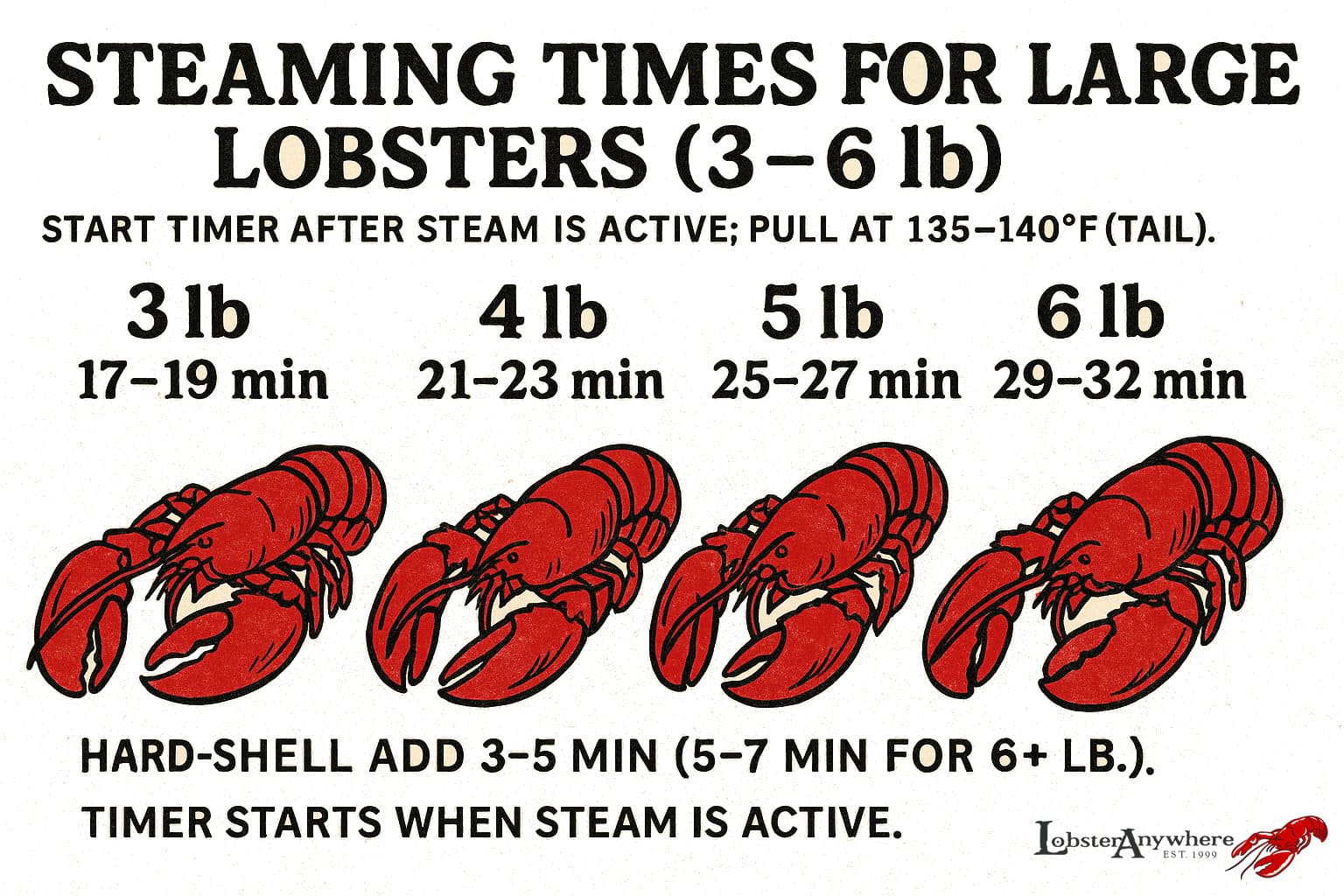
Timer starts when water returns to a rolling boil (boil) or active steam with lid on (steam). Hard-shell add ~3–5 min (5–7 min for 6+ lb). Rest 5 min or ice-bath if picking meat.
Need 6–10 lb times? See “Extra-Jumbo Lobsters (6–10 lb)” below.
Deep dive: Boil chart • Steam chart
Jumbo & Colossal Tails • 10–20 oz
Oven 350°F Finish 135–140°F- Prep: Butterfly or split lengthwise; pat dry. Optional 30-min brine (4 c water + ⅓ c kosher salt + ¼ c sugar; brine must be ice-cold).
- Bake baseline: 350°F center rack; finish at 135–140°F internal.
- Broil/Grill: High but controlled heat; keep distance from element/flame; baste with butter.
- Sous vide: 135°F for classic tender; quick broil/sear to finish.
- Tail Weight10–12 350°F Bake~12–15 Finish Temp135–140°F
- Tail Weight12–14 350°F Bake~16–20 Finish Temp135–140°F
- Tail Weight14–16 350°F Bake~18–22 Finish Temp135–140°F
- Tail Weight16–20 350°F Bake~20–26 Finish Temp135–140°F
Full tails guide: Times & temps by weight • Cutting: Butterfly vs. piggyback • Grill: Direct/indirect setup
Setup tips: 19–20 qt pot for ~5–6 average lobsters; 25+ qt for 6–10 lb. Boiling: ~1 gallon per lobster for 3–5 lb and 1.5–2 gallons per lobster for 6+ lb. Salt to ~2–3% (≈ ¼ cup/gal). Avoid crowding—cook in batches.
Why Big Lobsters Can Be Tender (Technique > Size)
Large lobsters hold heat longer, so it’s easy to overshoot if you’re only watching the clock. Start your timer after the water returns to a rolling boil (boiling) or steam is clearly active with the lid on (steaming), then verify doneness with a thermometer. If you’re picking meat, an ice bath stops carryover and keeps chunks clean and snappy.
Quick links:
- Boil times →Boil time chart
- Steam times →Steam time chart
- Live lobster step-by-step →How to cook live lobsters (step-by-step)
The Size Myth: Why Even 5–6 Pound Lobsters Cook Tender
There’s a persistent belief that lobsters over 3–4 pounds are inherently tough and chewy. This is false. We’ve cooked countless 5–6 pound lobsters that were every bit as tender and sweet as 1-pounders—the difference is technique, not biology.
The real issue is that recommended cooking times are often too long for large specimens. A 5-pound hard-shell lobster that’s overcooked by even 3–4 minutes will be rubbery throughout. The solution is straightforward: use a thermometer, start checking early, and pull at 135–140°F regardless of what the timer says.
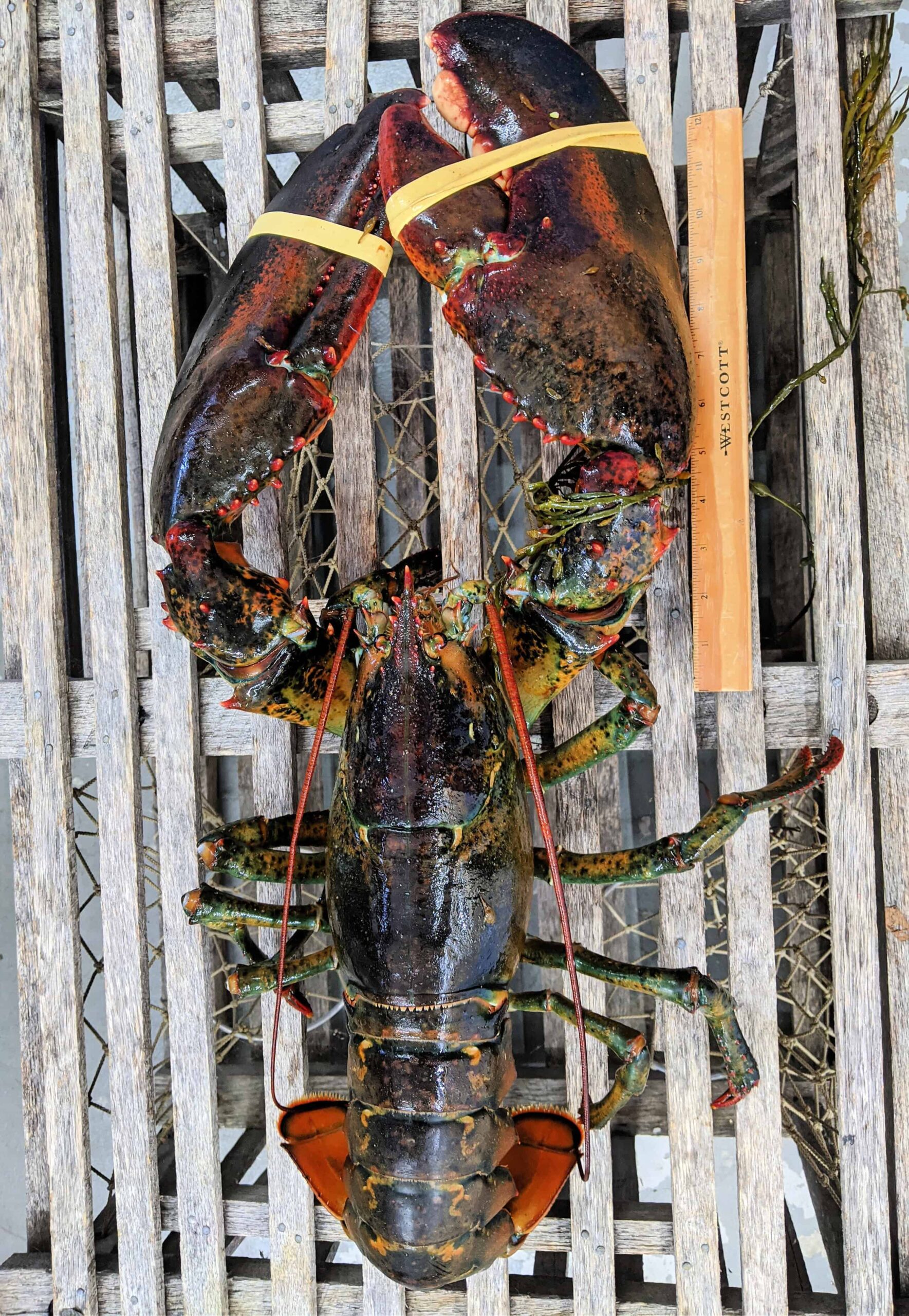
Large Lobster Size Guide: What to Expect
| Size | Cook Method | Yield | Serves | Best Use |
|---|---|---|---|---|
| 3 lb | Steam/Boil | 12–18 oz | 2–3 | Dinner for two |
| 5 lb | Steam preferred | 20–25 oz | 3–4 | Small gathering |
| 6–8 lb | Steam only | 24–35 oz | 4–6 | Special occasions |
| 10+ lb | Sous vide recommended | 40+ oz | 6–8 | Expert-level |
At-a-glance guide to 3–10 lb lobsters—recommended method, expected meat yield, and servings (aim to finish at 135–140°F).
Extra-Jumbo Lobsters (6–10 lb): Special Considerations
Lobsters in the 6-10+ pound range require special handling due to their massive thermal mass. These true giants can absolutely be cooked to perfection, but they demand precision and patience.
Timing for extra-large specimens
Use these as starting points, then verify with a thermometer:
- 6 lb: Steam 29–32 min, Boil ~25 min
- 8 lb: Steam 35–40 min, Boil ~30 min
- 10 lb: Steam 42–48 min, Boil ~35 min (steaming strongly preferred)
For hard-shell specimens in this range, add 5–7 minutes. Start checking at the low end of the range and pull when the thick tail joint reads 135–140°F.
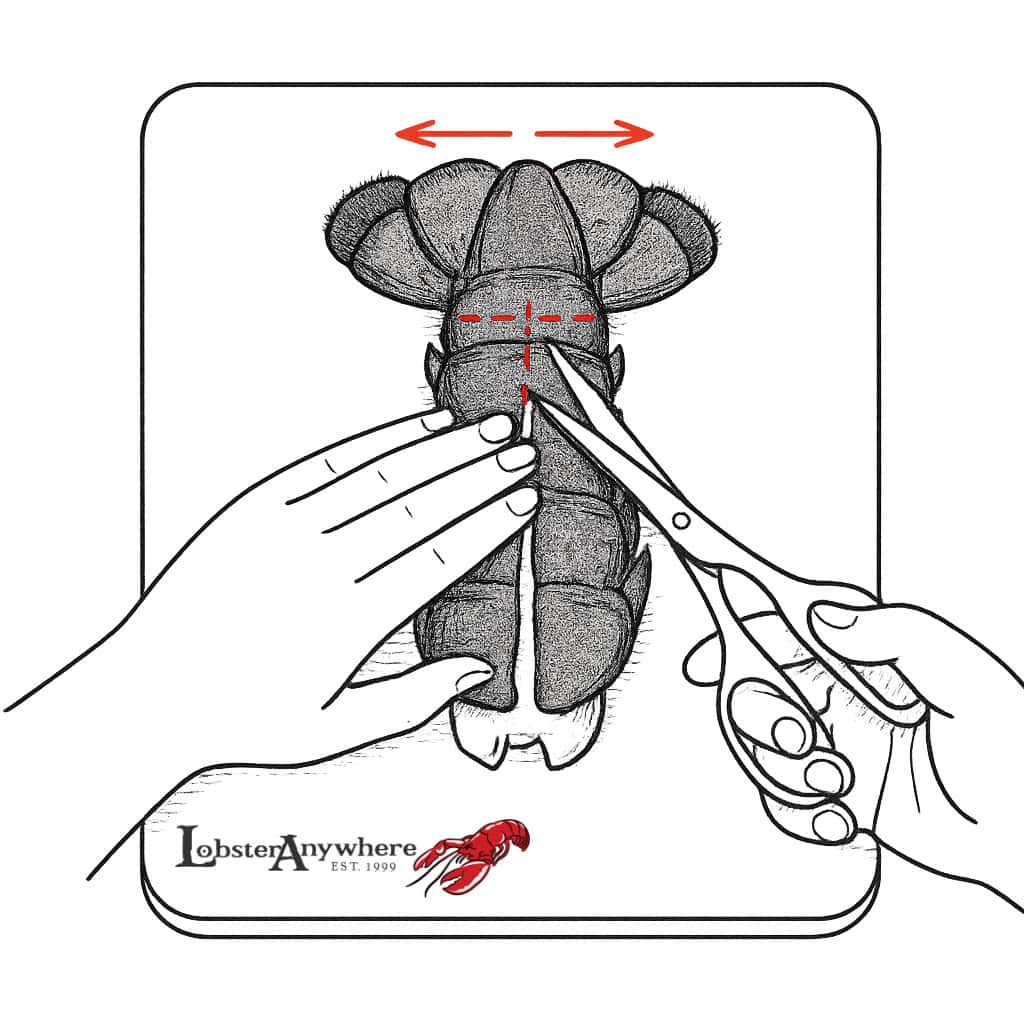
Cutting Techniques: Which Method for Large Tails?
Large tails (10-20+ oz) must be cut before cooking to ensure even heat penetration. Choose based on tail size and cooking method:
Quick reference:
- Butterfly → Best for 10-16 oz tails, baking/broiling, presentation
- Split/halve → Best for 16-20+ oz tails, grilling, fastest cooking
- Piggyback → Best for 12-16 oz tails, middle-ground option
When to use each:
- Baking/broiling 10-14 oz: Butterfly for elegant presentation
- Baking/broiling 16+ oz: Split completely for even cooking
- Grilling any size: Split works best; shell protects meat
- Maximum surface exposure needed: Piggyback cuts deeper into the meat than the butterfly method.
Detailed cutting guides:
Why steaming wins for giants
The gentler heat transfer of steaming gives you a wider margin of error on 6+ lb lobsters. Boiling can work, but the aggressive heat often overcooks the outer meat before the core finishes. If you must boil, use a large pot (25+ qt) and reduce the heat to a gentle boil after adding the lobster.
Equipment requirements
- Pot size: Minimum 25-quart stockpot for a single 6-8 lb lobster; 30+ quarts for 10 lb specimens
- Water volume: Plan 1.5–2 gallons per giant lobster when boiling
- Tools: Long-handled tongs (18″+), heavy-duty crackers, and a reliable instant-read thermometer
Yield expectations
Extra-jumbo lobsters offer impressive meat yields:
- 6 lb: ~24–30 oz meat (serves 4–5)
- 8 lb: ~32–40 oz meat (serves 5–7)
- 10 lb: ~40–50 oz meat (serves 6–8)
Pro tip for 8+ lb lobsters: Consider sous vide if you have the equipment. Set the water bath to 135°F and cook for 60–90 minutes (depending on size), then briefly finish under the broiler or on the grill. This eliminates the risk of overcooking entirely.
Steam vs. Boil for Large Lobsters (3–6+ lb)
Steaming is more forgiving for large thermal masses and reduces waterlogging, making it the preferred method for 5+ lb lobsters. Boiling is quicker but requires tighter timing and risks waterlogging on huge specimens. For lobsters weighing 6+ lb, steaming is strongly recommended unless you’re highly experienced.
For hard-shell lobsters, expect to add 3–5 minutes beyond baseline times for 3-5 lb lobsters, and 5–7 minutes for 6+ lb specimens. Either way, start checking early and pull at 135–140°F internal.
Deep dive:
- Boiling Live Lobsters: Time & Temperature Chart (Whole 3–5 lb)
- Steaming Live Lobsters: Step-by-Step Setup + Time Chart by Weight
Setup checklist (to keep big lobsters tender)
- Batch smart: Don’t crowd—maintain a true rolling boil or active steam; cook in batches if recovery lags.
- Pot size: A ~19–20 qt stockpot comfortably handles 5–6 average lobsters or 1–2 jumbo specimens (3–5 lb); scale up to 25+ qt for 6–10 lb giants.
- Water plan (boil): About 1 gallon per lobster for 3–5 lb sizes; increase to 1.5–2 gallons for 6+ lb specimens. Salt to ~2–3% (≈ ¼ cup per gallon).
- Start timing correctly: Begin the clock after the water returns to a rolling boil (boil) or steam is clearly active with the lid on (steam).
- Thermometer habit: Probe the thick tail joint; pull at 135–140°F (claws can be 140–145°F).
- Temper & rest: Avoid thermal shock—temper cold lobster 15–20 minutes before cooking; rest cooked lobster 5 minutes or use an ice bath if picking meat.
Deep dives: Boil • Steam • Live lobster guide
Common mistakes with big lobsters (and fast fixes)
- Assuming bigger means tougher: The myth persists, but 5–6 lb lobsters cook just as tender as small ones. Fix: Focus on temperature (135–140°F), not size prejudice.
- Starting the timer too early: Wait for the return to full boil/active steam. Fix: Start timing only then.
- Crowding the pot: Heat can’t recover; edges go rubbery. Fix: Size up or split batches.
- Skipping the split on jumbo tails: Centers lag while tips overcook. Fix: Butterfly or split lengthwise first.
- Ignoring shell hardness: Hard shells need more time, especially on large specimens. Fix: Add ~3–5 minutes for 3–5 lb and 5–7 minutes for 6+ lb; verify by thermometer.
- Flying blind on doneness: Color and curl mislead. Fix: Use an instant-read; pull at 135–140°F.
- No rest or chill when picking: Carryover turns meat stringy. Fix: Rest 5 minutes or ice-bath before picking.
- Salt guesswork: Under- or over-salting dulls flavor. Fix: Target ~2–3% (≈ ¼ cup per gallon).
More techniques: Lobster tails • Grilling tails • Blanch for shell-off
Jumbo & Colossal Lobster Tails (10–20+ oz)
Thick tails (10-20+ oz) cook unevenly unless you split or butterfly them first. For oven cooking, 350°F on the center rack is a reliable baseline. Timing scales with weight:
- 10–12 oz: 12–15 minutes
- 12–14 oz: 16–20 minutes
- 14–16 oz: 18–22 minutes
- 16–18 oz: 20–23 minutes
- 18–20 oz: 23–26 minutes
- 20+ oz (colossal): 30–35 minutes
Finish internal temp: 135–140°F. Hard shells: add ~1–2 minutes; start checking early.
Quick reference:
- Butterfly → Best for 10-16 oz tails, baking/broiling, presentation
- Split/halve → Best for 16-20+ oz tails, grilling, fastest cooking
- Piggyback → Best for 12-16 oz tails, middle-ground option
When to use each:
- Baking/broiling 10-14 oz: Butterfly for elegant presentation
- Baking/broiling 16+ oz: Split completely for even cooking
- Grilling any size: Split works best; shell protects meat
- Maximum surface exposure needed: Piggyback cuts deeper into the meat than the butterfly method.
Detailed cutting guides:
Always finish at 135–140°F internal. For high heat (broil/grill), keep the meat slightly farther from the element/flame and baste with butter to prevent drying.
Moisture insurance (optional): A 30-minute brine (4 c water + ⅓ c kosher salt + ¼ c sugar; fully ice-cool first) can help big tails stay plush under high heat.
How to brine jumbo tails: Heat 4 cups of water with ⅓ cup kosher salt and ¼ cup sugar, stirring until dissolved (5–7 minutes). Cool completely by adding ~3 cups ice—the brine must be ice-cold before adding raw tails. Submerge butterflied or split tails and refrigerate for 30 minutes. The sugar buffers protein contraction during high-heat cooking, widening your margin of error on thick tails.
Grilling Jumbo Tails (10-20+ oz)
Grilling adds smoky char and works beautifully for large tails when properly managed.
Prep:
- Split lengthwise for best results (butterfly works for smaller tails)
- Optional 30-min brine
- Brush meat generously with butter or oil
Two-zone grilling method:
- Start indirect (shell-side down): Medium heat (350-375°F), lid closed
- 10-12 oz: 6-8 minutes
- 14-16 oz: 8-12 minutes
- 18-20+ oz: 12-15 minutes
- Finish direct (meat-side down): High heat for char
- All sizes: 2-4 minutes, watch closely
- Baste with butter every 2-3 minutes
Always finish at 135-140°F internal
Key tips:
- Shell-side down protects meat from drying
- Use an instant-read thermometer (grill temps vary)
- Watch for flare-ups from butter drips
- If tail curls excessively, it’s overcooking
Complete grilling guide: Grilling lobster tails: direct & indirect heat, temps and timing
Optional: Grilling split whole lobsters (3-5 lb)
Split 3-5 lb lobsters lengthwise, place shell-side down over indirect heat (350-375°F). Grill with lid closed, basting frequently: 3 lb = 15-18 min, 4 lb = 18-22 min, 5 lb = 22-26 min. Finish at 135-140°F in thick tail joint. Optional: Quick char the meat, meat-side down, over direct heat for 2-3 minutes.
Helpful links:
- Lobster tail cooking times by weight (bake/broil/grill chart)
- How to cut lobster tails: butterfly vs. piggyback (step-by-step)
- Blanching lobster for shell-off meat & poaching (2-minute method)
No Stockpot? Cook Big Lobsters with a Turkey Fryer or Roasting Pan
No Stockpot? Cook Big Lobsters with a Turkey Fryer or Roasting Pan
Both methods work beautifully when you mind volume, heat recovery, and the same finish temp target: 135–140°F in the thick tail joint.
Turkey Fryer (Outdoor Boil/Steam)
30–32 qt pot Propane burner Rack/Basket Why it works- Volume & rebound: Fryer pots (30–32 qt) offer the capacity and BTUs to recover heat quickly after you add heavy lobsters.
- Steaming is more forgiving: Use 2–3 inches of salted water and a basket/rack; steam surrounds the lobster without waterlogging the meat.
- Water: Plan ~1 gallon per lobster for 3–5 lb sizes; increase to 1.5–2 gallons per lobster for 6+ lb specimens. Salt to ~2–3% (≈ ¼ cup per gallon).
- Depth: Enough to cover lobsters by 1–2 inches, but never fill above ¾ pot.
- Timing: Start the clock only after water returns to a rolling boil with the lid on. Check early; pull at 135–140°F.
- Rack: Basket or improvised rack (inverted colander, bricks + rack) above 2–3 inches of salted water.
- Lid & vent: Keep lid on; crack slightly if boil-overs threaten. You want active steam, not a violent boil.
- Timing: Start the clock when steam is clearly active. Check early; finish at 135–140°F. Hard shells: add +3–5 min (3–5 lb) or +5–7 min (6+ lb).
- Pre-chill live lobsters 15–20 min in the fridge/over ice to calm movement.
- Batch smart: Don’t crowd; consistent batch sizes help even cooking and quicker recovery.
- After-cook: Rest 5 min (or ice-bath if picking meat) to control carryover.
Safety snapshot
- Outdoor use only on a level, non-combustible surface; keep a lid nearby to tame boil-overs.
- Never fill the pot over ¾ full. Lower lobsters slowly to prevent splashing.
- Wear heat-resistant gloves and use long tongs. Keep kids/pets well away from the burner.
Steaming is your best margin of error on 5–10 lb giants; boiling works but risks waterlogging/overcooking the exterior.
Turkey Roasting Pan (Oven Bake/Broil)
For tails & claws 350°F baseline Rack + pan Best for- Jumbo/colossal tails (10–20+ oz) and large claws. Whole giants are better on steam/boil; the oven shines for pre-cut pieces.
- Batch capacity: Most standard roasting pans (16–20" length) accommodate 4–6 jumbo tails with proper spacing for air circulation.
- Prep: Butterfly or split lengthwise; pat dry. Optional 30-min brine (4 c water + ⅓ c kosher salt + ¼ c sugar; fully ice-cold).
- Baseline: 350°F center rack on a roasting pan with rack. Brush with butter; season.
- 10–12 oz: 12–15 min
- 12–14 oz: 16–20 min
- 14–16 oz: 18–22 min
- 16–20 oz: 20–26 min
All finish at 135–140°F.
Broiling (fast, watch closely)- Keep meat 6–8 inches from the element; baste with butter to prevent drying.
- Use short bursts; rotate the pan for even browning. Verify with a thermometer—doneness is still 135–140°F.
- Set tails on a rack in a roasting pan; add ½–1 inch hot salted water. Tent loosely with foil.
- Cook at 350–375°F until 135–140°F, then uncover and quick broil 1–2 min for color.
Need whole-lobster guidance? Steaming/boiling is still the most reliable for 3–10 lb. Use the fryer method above.
Batch Workflow & Holding
- Batch sizes: Keep batches consistent (same sizes/shell hardness) so timing stays predictable.
- Holding whole: Briefly tent with foil up to ~10 minutes; avoid sealing tightly (steam softens texture).
- Picking meat: For clean, snappy chunks, ice-bath 3–5 minutes, then pick.
- Serving warm in butter: Hold picked meat in 140–160°F clarified butter up to ~30–45 minutes; don’t exceed this window.
Aftercare, Cleanup & Smell Control
- Strain & cool cooking liquid; discard shells promptly (double-bag). A quick simmer with lemon peels helps deodorize pots.
- Rinse baskets/racks while still warm; salt residue is easier to remove before it dries.
- Save shells for stock: roast at 400°F 10–15 min, then freeze for bisque nights.
Related: Timing charts • Full boiling guide • Full steaming guide
Big Lobster FAQs
How long do you boil a 3 lb lobster?
Once the pot returns to a rolling boil, cook about 14 minutes for a hard-shell 3 lb lobster. Start checking early and pull when the thick tail meat hits 135–140°F; add 2–3 minutes if shells are very hard or the pot is crowded.
Is steaming better for 4–5 lb lobsters?
Usually yes—steaming is more forgiving and reduces waterlogging on big lobsters. Plan roughly 21–23 minutes for 4 lb and 25–27 minutes for 5 lb after steam is active (lid on), then verify 135–140°F in the tail.
What oven temp and time for a 12–14 oz tail?
Bake at 350°F on the center rack, butterflied. Expect about 16–20 minutes; begin checking early and finish at 135–140°F internal. Optional: broil the top 1–2 minutes for light browning.
Should I butterfly or piggyback jumbo tails?
Butterfly (cut top shell, lift meat onto the shell) for even baking/broiling and presentation. Piggyback or split lengthwise is great for high-heat grilling and faster, more even searing on very thick tails.
How do I thaw 16–20 oz tails safely?
Best: overnight in the fridge (12–24 hrs) on a tray with paper towels. Faster: sealed bag in cold water, changing water every 30 minutes until thawed. Never thaw at room temp; pat dry before cooking.
What internal temperature is lobster done?
Target 135–140°F in the thickest part of the tail meat (claws can be closer to 140–145°F). Expect a couple degrees of carryover after you pull from heat.
How much meat is in a 3 lb lobster, and how many does it serve?
Yield varies by shell hardness and season, but a 3 lb lobster typically gives about 12–18 oz of meat. For mains, plan 6–8 oz per person, so it serves 2 (generously)—or 3 with plenty of sides.
How to Cook a 6-pound live lobster?
Steam a 6 lb hard-shell lobster for 29–32 minutes after the steam is fully active, or boil for approximately 25 minutes after the water returns to a rolling boil. Always verify with a thermometer—pull when the thick tail meat reaches 135–140°F. Add 5–7 minutes if the shell is exceptionally hard.
Love lobsters The bigger the better Yummy Too bad I can’t afford them