
Choosing the right pot and setup is the difference between tender lobster and rubbery disappointment. This guide covers pot sizes by lobster count, the correct salt ratio, steamer vs. boil hardware, thermometer placement, and workflow tips—including how to use a turkey fryer when your kitchen stockpot is too small. For exact times and temps (3–10 lb lobsters), see How to Cook Large Lobsters.
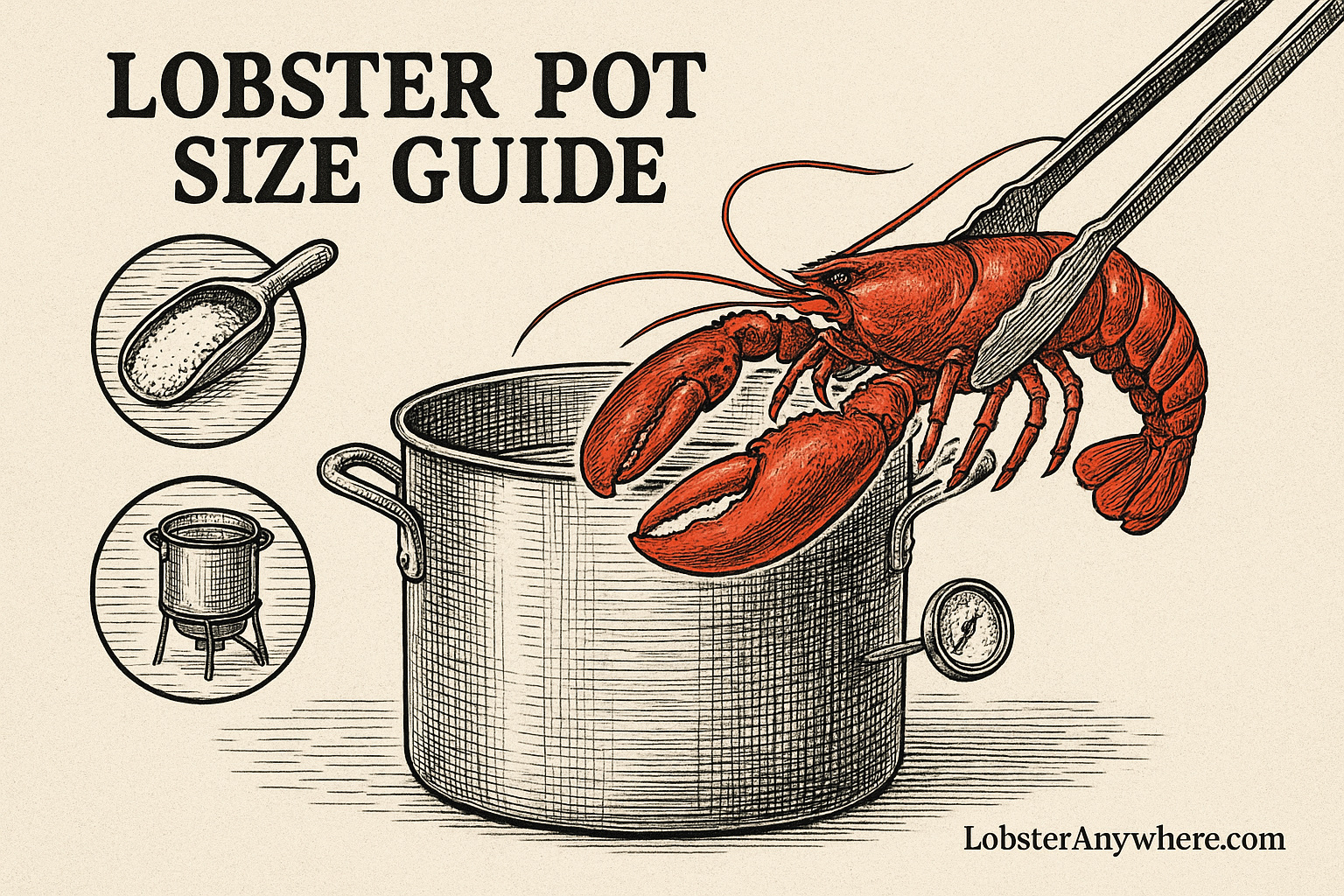
Lobster Pot Size Chart (by Count & Weight)
Don’t crowd: maintain a true rolling boil or active steam. Cook in batches if recovery lags.
| Lobsters (avg size) | Recommended Pot | Water (boil, per lobster) | Notes |
| 1–2 (1–1.5 lb) | 8–12 qt stockpot | about one gal per lobster | Easy weeknight boils |
| 3–4 (1.25–1.75 lb) | 16 qt stockpot | about one gal per lobster | 24–30 qt/turkey fryer |
| 5–6 (1.5–2 lb) | 19–20 qt stockpot | about one gal per lobster | Consider two batches |
| 1–2 jumbo (3–5 lb) | 20–24 qt stockpot | about one gal per lobster | Steaming is more forgiving |
| 6–8 (1–1.5 lb) | 24–30+ qt/turkey fryer | about 1 gal per lobster | Outdoor burner recovers faster |
| 1 giant (6+ lb) | about one gal per lobster | 1.5–2 gal per lobster | Steam preferred for tenderness |
* Unit note: 1 US quart = 0.946 L (rounded here to 0.95 L).
Rule of thumb (boil): about 1 gallon per lobster for 3–5 lb; 1.5–2 gallons per lobster for 6+ lb. For steaming, leave headroom and keep steam actively circulating. See How to Cook Large Lobsters for time tables.
Lobster Capacity by Pot Size
| Pot Size | Typical Pot Type / Shape | Boil Capacity (pot about ⅔ full) | Steam Capacity (2–3 inches of water under the rack) |
| 8 qt | Standard stockpot / wide Dutch oven | 1 | 1–2 |
| 12 qt | Large stockpot (often tall) | 1–2 | 2–3 |
| 16 qt | Canner-style (often wide) | 3–4 | 3–4 |
| 20 qt | Large canner (wide) | 5–6 | 5–6 |
| 24 qt | Large canner / small fryer | 6–8* | 6–8* |
| 30+ qt | Turkey fryer (often tall) | 8–10* | 8–10* |
| Jumbo (3–5 lb) | Use 20–24 qt (wide-base) | 1 | 1–2 |
Notes: Upper ranges assume about 1.25–1.5 lb lobsters and a wide-base pot. If the pot is narrow or all lobsters are closer to 1.5 lb, subtract one from the upper range. Outdoor burners recover heat faster. For 3–5 lb jumbo lobsters, steam 1–2 in a 20–24 qt pot. Boiling a single is possible in 20–24 qt—use about 1 gallon of water per lobster and start timing only after a full return to rolling boil or active steam.
💡 Pro Tip: You Don’t Need a Fancy Pot
A lighter-gauge stockpot actually reaches a boil faster than heavy cookware. Any large stockpot, pasta pot, or soup pot works—no specialty gear required.
Boil vs Steam: Hardware & Setup
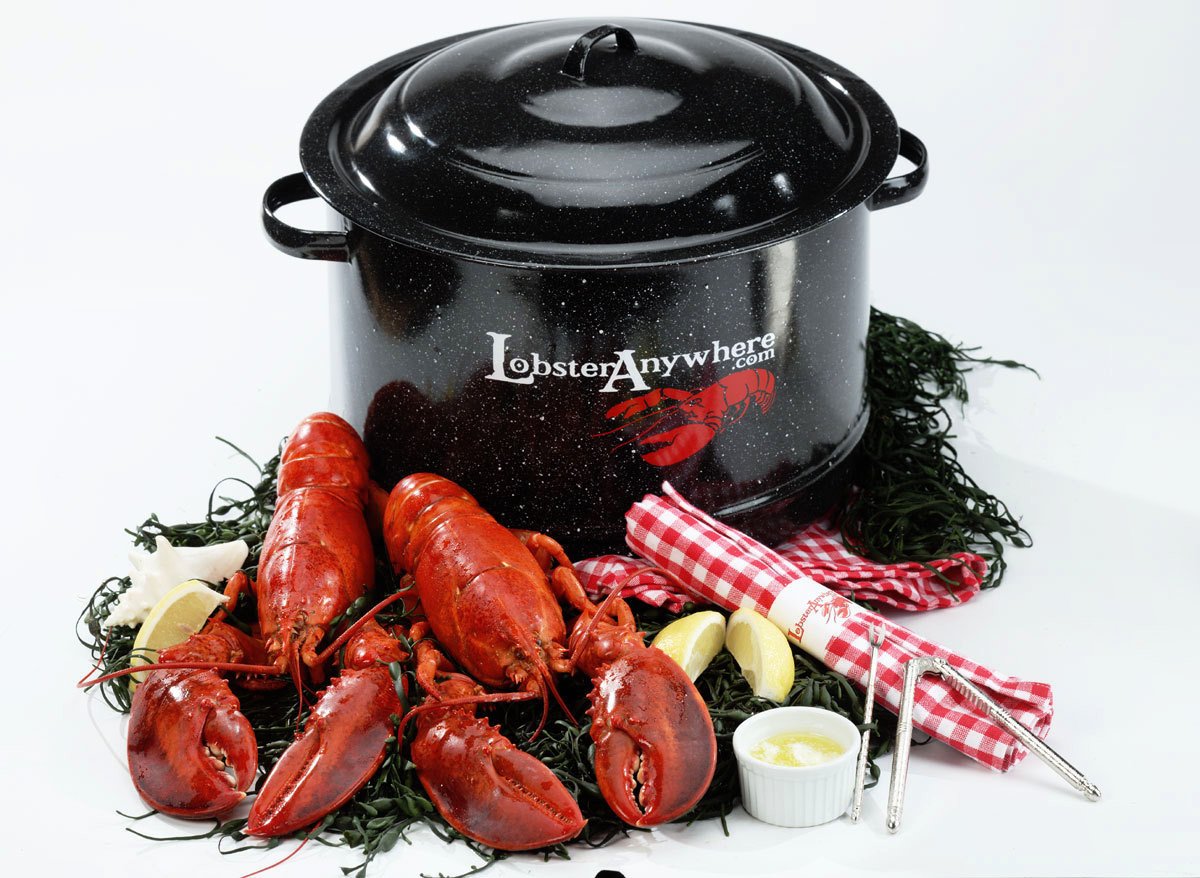
Boiling
- Pot: Wide-base stockpot helps heat recovery.
- Seasoning: Salt to 2–3% (about ¼ cup kosher salt per gallon).
- Risk: Waterlogging and overcooking if crowded.
- Best for: Smaller lobsters and quick batches.
Recovery: If the boil stops for 30 seconds or longer after loading, reduce batch size or switch to steam.
Boiling basics: How to Boil Lobster (Times & Tips)
Steaming (preferred for big lobsters)
- Pot: Stockpot with rack/insert or a tall tamale steamer.
- Benefit: Gentler heat, cleaner flavor, wider timing margin.
- Clock starts: Only after steam is clearly active.
- Best for: 5–6 lb+ and mixed sizes.
Steaming walkthrough: How to Steam Live Lobsters
Salt Ratio for Lobster Water (2–3%)
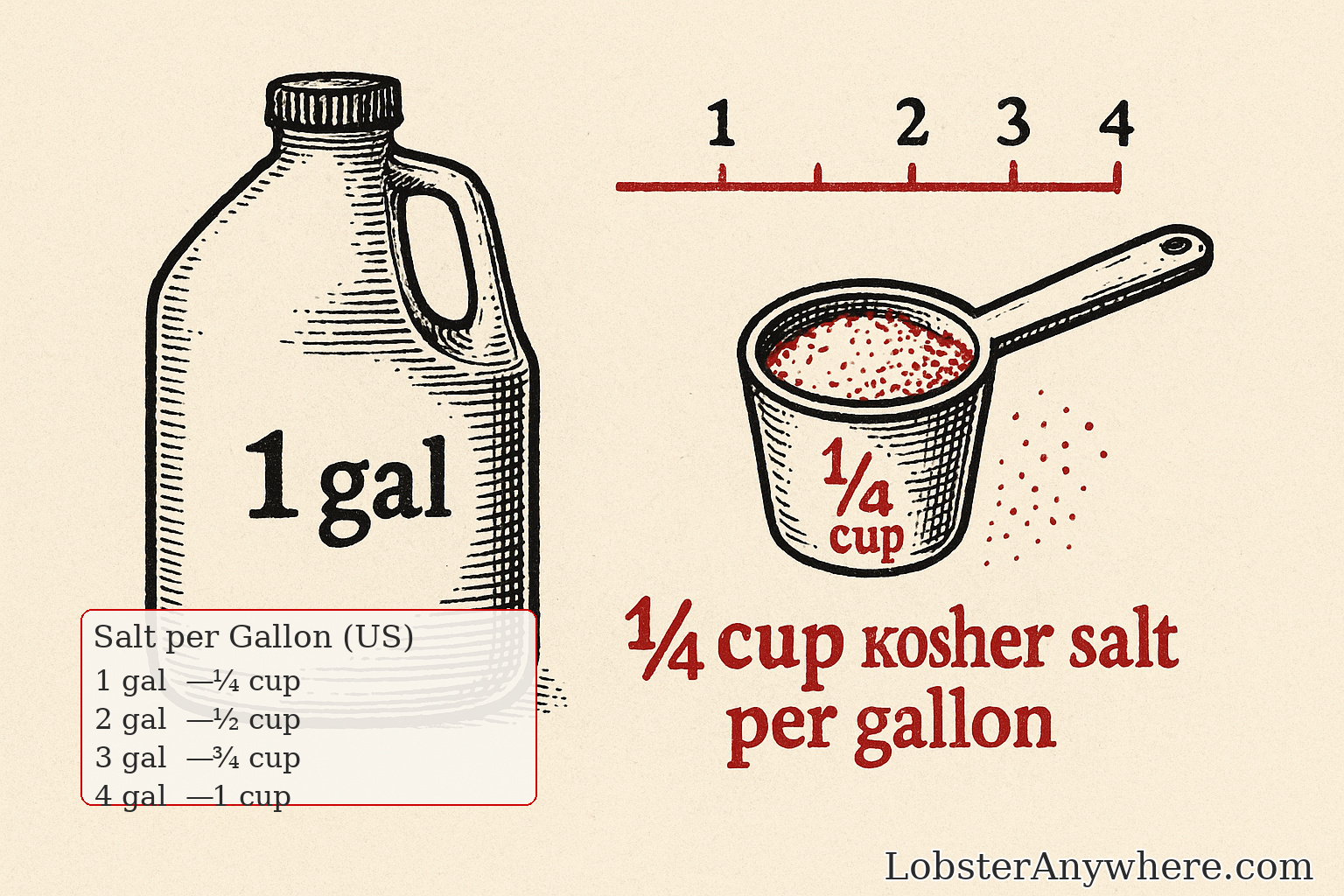
Aim for 2–3% salinity (about ¼ cup kosher salt per gallon; 36–60 g depending on brand). Clean seawater is ideal if available.
| Volume | Salt Amount | Notes |
| 1 gallon | About ¼ cup (4 Tbsp) | Baseline |
| 2 gallons | About ½ cup (8 Tbsp) | Scale linearly |
| 3 gallons | About ¾ cup (12 Tbsp) | For bigger batches |
| 4 gallons | About 1 cup (16 Tbsp) | Large pots/turkey fryer |
Salt specifics: Salting Lobster Water (Guide)
Thermometer Placement & Doneness
- Probe: Thick tail joint where it meets the body (insert from underside).
- Target pull range: 135–140°F in the tail; claws 140–145°F.
- Start timing only after a true rolling boil/active steam returns.
- If picking meat, use an ice bath to stop carryover and keep chunks clean.
Detailed times & temps: How to Cook Large Lobsters
Small Pot? Batch, Two-Pot, or Par-Cook
Batch method
- Cook what fits without crowding; wait for a full return to boil before the next batch.
- Top up water & salt as needed; early batches create a light lobster broth.
Two-pot & Par-cook
- Two-pot: Stagger starts so finishes don’t collide—faster service, less chaos.
- Par-cook (2–5 min): Set meat, split, then finish on grill/broiler when the pot is undersized.
No Giant Stockpot? Use a Turkey Fryer or Roasting Pan
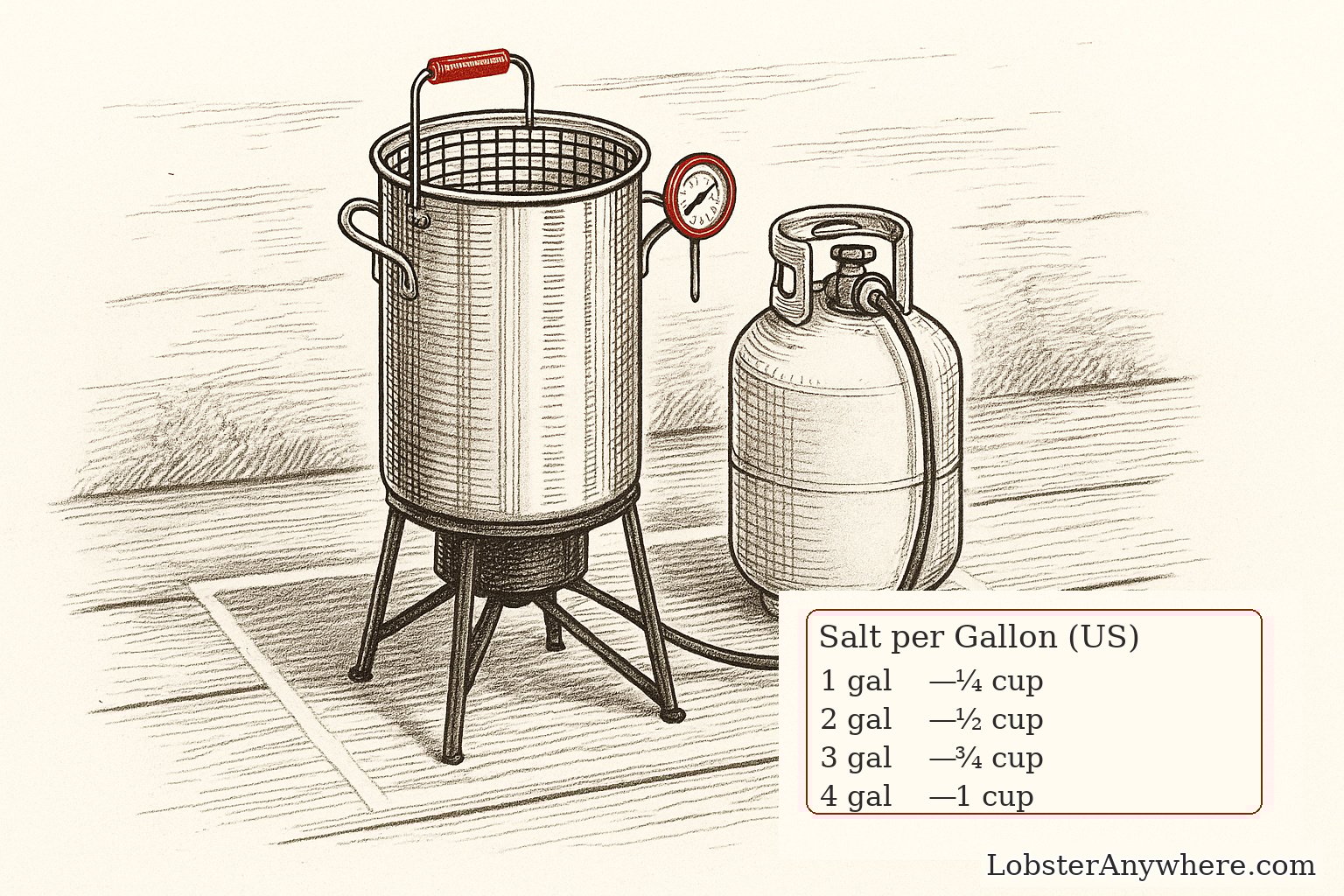
Turkey fryer (boil/steam)
- Capacity: 24–32 qt is ideal for large or multiple lobsters.
- Water plan (boil): about 1 gal per lobster for 3–5 lb; 1.5–2 gal per lobster for 6+ lb.
- Why it works: Outdoor burner recovers heat quickly; basket makes lifting safer.
- Tip: Steaming is more forgiving for 5–6 lb+ specimens.
For timing reference, see: How to Cook Large Lobsters
Roasting pan (tails)
- Best for: Jumbo/colossal tails split or butterflied.
- Baseline: 350°F on the center rack; finish at tail-pull temps by weight.
Tail doneness: Lobster Tail Times & Pull Temps
Cutting methods: Butterfly vs. Piggyback Tails
Workflow, Safety & Tools
- Batch smart: If the boil fades, split the batch.
- Start timing correctly: After returning to boil/active steam.
- Shell hardness: Add about 3–5 min for hard-shell (5–7 min for 6+ lb).
- Temper & rest: Temper for 15–20 min before cooking; rest for 5 min (or an ice bath if picking).
- Tools: Long tongs, shears, crackers, sheet tray + rack, instant-read thermometer.
Gear list: Lobster Tools Guide
FAQ: Lobster Pots, Salt & Steamer Setup
What size pot do I need for four lobsters?
A 16 qt stockpot works for four ~1.25–1.75 lb lobsters. Keep ~1 gallon per lobster for boiling, or use a steamer insert and avoid crowding. For time tables, see How to Cook Large Lobsters.
How much salt per gallon for lobster boiling water?
Season to ~2–3% salinity: about ¼ cup kosher salt per gallon (reduce slightly if using fine salt). More in the boiling guide: https://lobsteranywhere.com/seafood-savvy/boil-lobster/
Is steaming better than boiling for big lobsters?
Usually yes. Steaming applies gentler heat and reduces waterlogging, giving a wider timing margin for 5–6 lb+ lobsters. For exact timing, see How to Cook Large Lobsters.
Can I use a turkey fryer to cook large lobsters?
Yes. A 24–32 qt fryer with a basket is great for big batches. For boiling, plan ~1 gal per lobster (3–5 lb) or 1.5–2 gal per lobster (6+ lb); for steaming, ensure active steam and space. See How to Cook Large Lobsters.
How many lobsters can I cook in a 16-quart pot?
3–4 at ~1.25–1.75 lb, if not crowded; cook in batches if recovery lags.
Do I salt the water for steaming?
Lightly—optional; the meat isn’t submerged, so flavor impact is minimal.
Why did my boil stop?
Crowding drops the temp; wait for a true rolling boil before starting the timer.
Ready to Cook Perfect Lobster?
Now that you’ve matched your pot to your lobster count, you’re set up for success.
Remember: don’t crowd the pot, salt to 2–3%, and start timing only after the boil
returns. Whether you’re steaming a 6 lb giant in a turkey fryer or boiling two
1-pounders in your everyday stockpot, proper setup makes all the difference.
Not sure if your lobster is done? Learn the visual cues and texture tests in our
guide on how to tell when lobster is done.
Ready to cook? Buy Live Maine Lobsters | Prefer tails? Shop Lobster Tails