
We have cooked more lobsters than we can count, and the thing that separates sweet, tender meat from rubbery is about a minute of attention. That is the whole game. Cook it a minute short and the meat is translucent and mushy. Cook it a minute long and it turns tough and dry, and there is no walking that back. The good news is you do not have to guess. A thermometer settles it every time, and once you know what to look and feel for, you will read a done lobster the same way we do on the floor.
Quick Answer: 3 Ways to Tell Lobster is Done
- Temperature Test: Internal temp of 135-140°F (most reliable)
- Visual Check: Bright red shell + opaque white meat throughout
- Physical Test: Tail curls under body, walking legs pull away easily
Perfect doneness = Firm but tender meat with no translucent areas
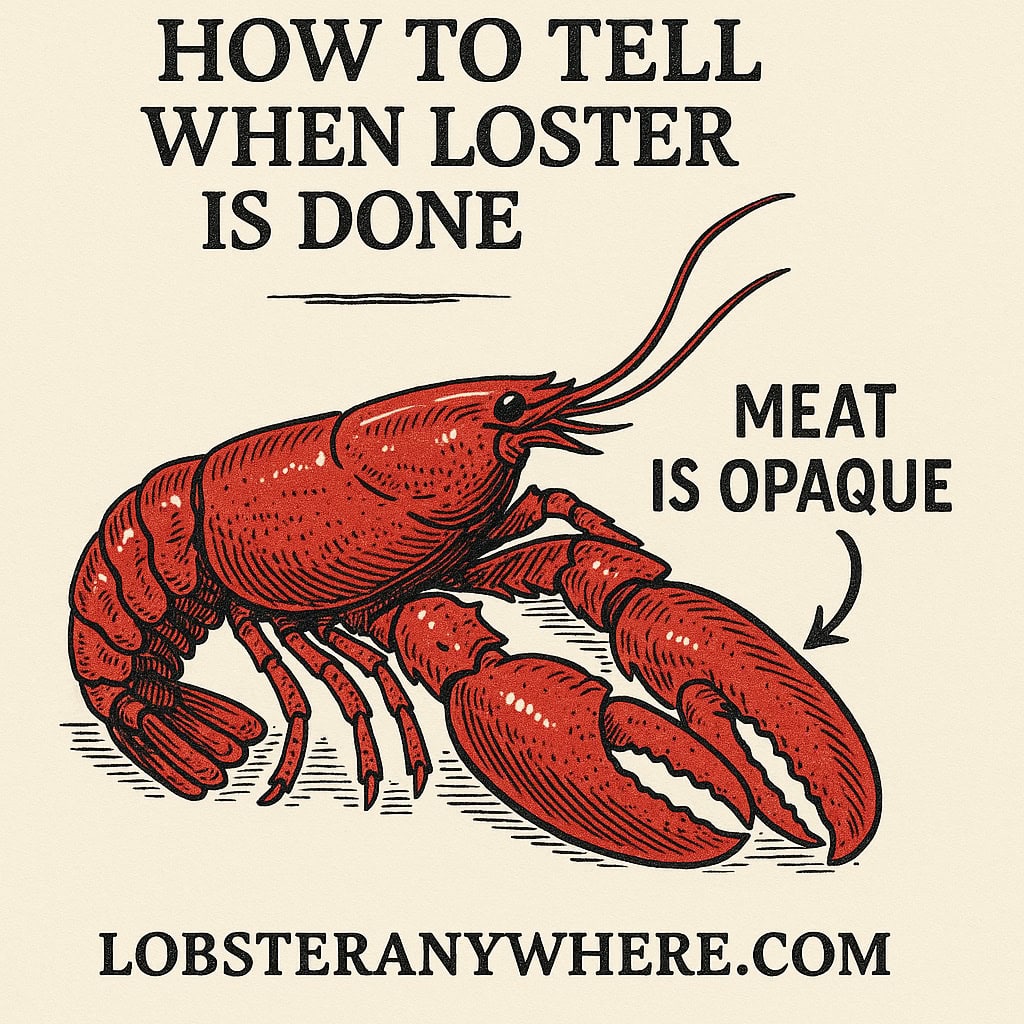
Below you will find three ways to check doneness: a thermometer reading, what to look for, and what to feel for. We also cover how to fix a lobster that came out under or over.

For precise cooking times to complement these doneness tests, check our lobster cooking times by weight guide before you start cooking.
Why Proper Doneness Testing Matters
The Science of Lobster Doneness
Lobster meat undergoes specific protein changes as it cooks that determine both safety and quality. At temperatures below 135°F, harmful bacteria may survive, and the meat remains translucent and mushy. Between 135-145°F, proteins coagulate properly, creating that perfect firm yet tender texture with opaque white color throughout.
Above 145°F, proteins contract too aggressively, squeezing out moisture and creating the dreaded tough, chewy texture that ruins even the finest lobster. This narrow temperature window is why mastering doneness testing is so crucial.
Cost of Getting It Wrong
Given the lobster’s premium price, mistakes are expensive. Undercooked lobster presents food safety risks and an unpleasant eating experience. Overcooked lobster is a waste of money and ruins special occasions. Learning reliable doneness tests helps you consistently achieve that perfect, sweet, tender bite that makes lobster worth the investment.
Understanding Lobster Texture
Unlike white fish, lobster meat has longer muscle fibers and does not flake when cooked. This is why properly cooked lobster has a distinctive, firm, meaty texture rather than the flaky consistency of fish. These longer fibers also mean that lobster requires precise temperature control to avoid becoming tough and chewy.
How Do You Know When Lobster is Perfectly Cooked?
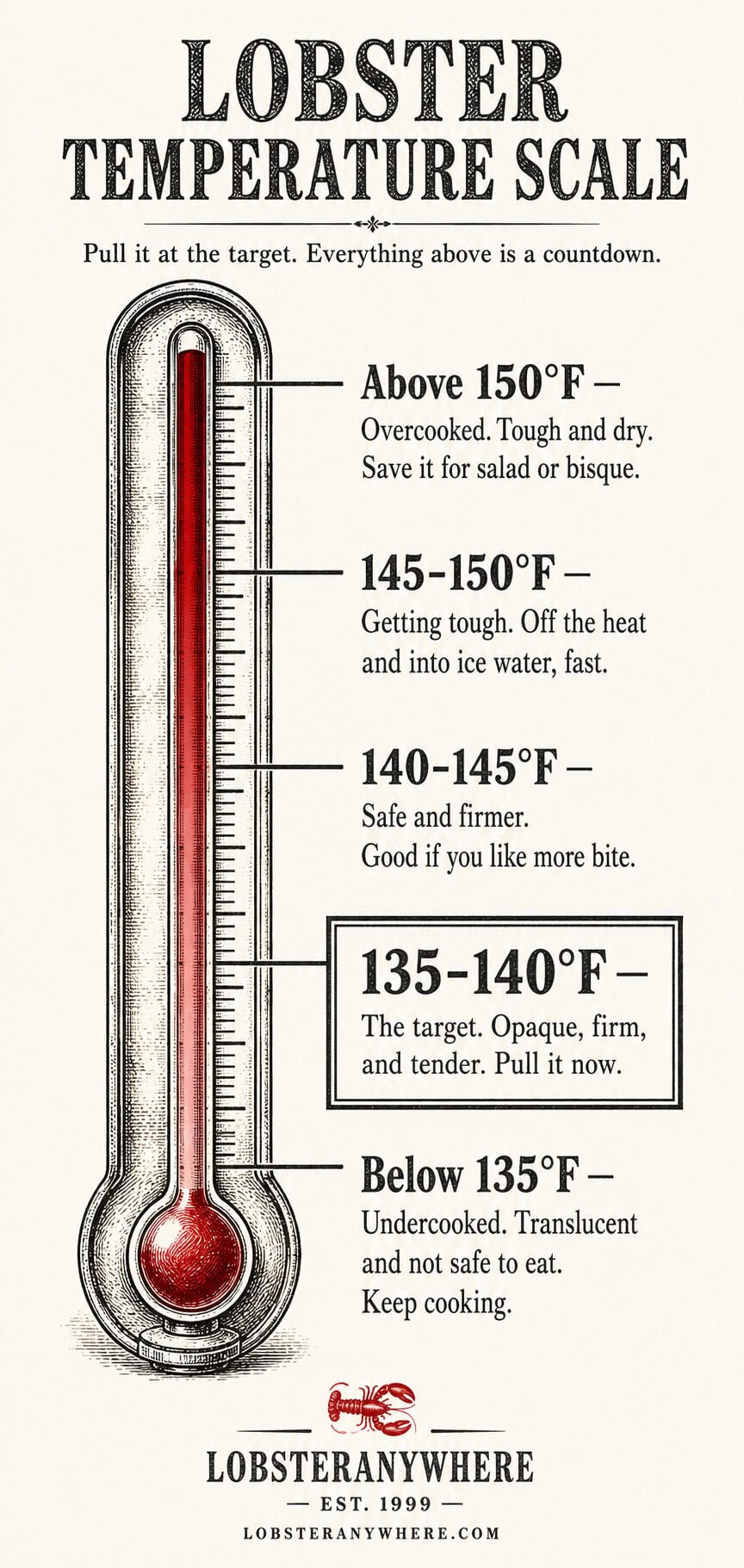
What Temperature Should Cooked Lobster Be? (135-140°F)
The most foolproof way to ensure perfectly cooked lobster is to use an instant-read digital thermometer. This method eliminates guesswork and provides precise, consistent results every time.
Target Temperature Range: 135-140°F
- 135°F: Minimum safe temperature, very tender texture
- 140°F: Slightly firmer texture, preferred by many
- 145°F: FDA-recommended temperature, firmer but still good
Proper Thermometer Placement:
- Insert from the underside of the tail where it meets the body
- Aim for the thickest part of the tail meat
- Avoid hitting the shell, which gives false readings
- Insert parallel to the body about halfway through the meat
- Get reading within 2-3 seconds with a quality digital thermometer
Pro Tips for Thermometer Testing:
- Use probe-style thermometers rather than large dial types
- Check the largest lobster first if cooking multiple sizes
- Clean thermometer between tests to avoid cross-contamination
Lobster Cooking Temperature Chart: Quick Reference
Lobster Doneness Temperature Guide
Understanding the exact temperature ranges helps you achieve perfect texture every time. Here’s your complete temperature reference:
| Temperature | Doneness Level | Texture & Safety | When to Remove | Best For |
|---|---|---|---|---|
| Below 130°F | Undercooked ❌ | Translucent, unsafe | Never serve | Continue cooking |
| 130-134°F | Nearly Done ⚠️ | Mostly opaque, may be unsafe | Continue cooking | Not recommended |
| 135-137°F | Perfect (Tender) ✅ | Opaque, very tender, safe | Remove now | Fine dining preference |
| 138-142°F | Perfect (Firm) ✅ | Opaque, firm but tender | Remove now | Most popular range |
| 143-145°F | FDA Safe ✅ | Firmer texture, fully safe | Remove immediately | Conservative cooking |
| 146-150°F | Approaching Overcooked ⚠️ | Getting tough, dry | Too late | Salvageable for recipes |
| Above 150°F | Overcooked ❌ | Tough, chewy, dry | Way too late | Use for lobster salad |
Temperature Conversion (°F to °C)
| Fahrenheit | Celsius | Doneness |
|---|---|---|
| 135°F | 57°C | Minimum perfect |
| 140°F | 60°C | Ideal target |
| 145°F | 63°C | FDA safe |
| 150°F | 66°C | Overcooked |
Carryover Cooking Guide
| Removal Temperature | Final Temperature After 5 Minutes | Result |
|---|---|---|
| 130°F | 135-137°F | Perfect tender |
| 135°F | 140-142°F | Ideal target |
| 140°F | 145-147°F | Firm but good |
| 145°F | 150°F+ | Risk of overcooking |
Critical: Lobster continues cooking after removal from heat!
How Long to Cook Lobster by Size and Method
While temperature testing is the most reliable doneness method, knowing approximate cooking times helps you start checking at the right moment. Here are quick time ranges for the most common cooking methods:
Quick Cooking Time Reference
| Lobster Size | Steaming Time | Boiling Time |
|---|---|---|
| 1-1.5 lbs | 9-11 minutes | 7-9 minutes |
| 1.5-2 lbs | 11-13 minutes | 9-11 minutes |
| 2-3 lbs | 13-16 minutes | 11-14 minutes |
| 3-4 lbs | 17-20 minutes | 15-17 minutes |
Important timing notes:
- Times start when the water returns to a boil after adding the lobsters
- Hard-shell lobsters (fall/winter) may need 1-2 extra minutes
- Soft-shell lobsters (summer) may cook 1 minute faster
- Always verify doneness with temperature testing
Remember: Always use individual lobster weights, not total weight, when cooking multiple lobsters. A 1.5 lb lobster needs 1.5 lb of timing, even if you’re cooking four of them together.
For complete timing charts including grilling, baking, and other methods, plus detailed instructions for each cooking technique, see our comprehensive lobster cooking times by weight guide.
Stopping the Cooking Process
When you remove lobsters from the pot, they continue to cook from residual heat. To immediately stop the cooking process, transfer your lobsters to a large bowl of ice water. This prevents overcooking and maintains the perfect texture.
The overcooking vs. undercooking reality: These two misses are not equal. Overcook a lobster and the meat turns tough and chewy, and there is no walking that back. Undercook one and you simply put it back on the heat for another minute or two. That asymmetry is the whole reason we tell you to stop a hair short and lean on the thermometer.
It is also where the “big lobsters are tough” idea comes from. They are not tough by nature. A 5 or 6 pounder cooks up just as sweet as a 1 pounder when you pull it at the right temperature; it only turns rubbery when the extra size gets extra time it did not need. If you are cooking the big ones, our guide to cooking large lobsters has the timing.
How to Tell if Lobster is Done Visually
What Color Should Cooked Lobster Be?
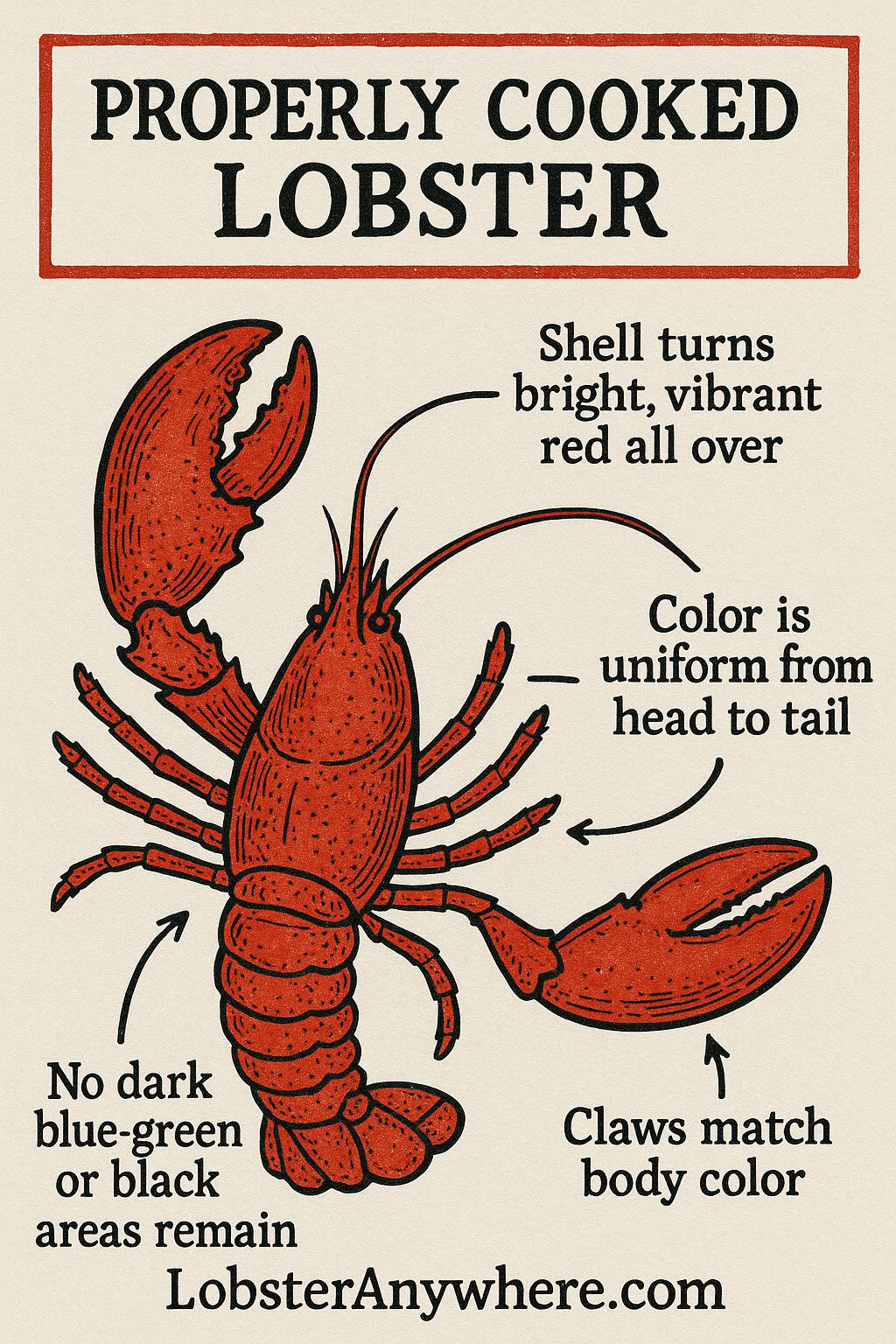
A done lobster goes bright red, top to bottom, claws matching the body. That dark blue-green you saw in the tank turns the moment it is cooked through, so any patch still showing dark is a spot that needs more time. Shades of red vary a little from lobster to lobster, and that is fine. What you are watching for is even color with no dark holdouts.
A word of caution the other way: a shell gone very dark red or brownish, or blotchy and mottled, usually means it went too long or the pot was crowded. Color gets you close, but it is the least precise of the checks, so treat it as a first glance and confirm with the thermometer.
The Tail Contraction Test (Freshness Indicator)
For whole lobsters: A properly cooked fresh lobster tail will contract and curl tightly under the body. The tail meat should feel somewhat firm, never mushy. This curling action indicates both proper cooking and lobster freshness before cooking.
How to Tell if Lobster Meat is Done: Visual Signs
Perfect Doneness Indicators:
- Opaque white color throughout all meat
- No translucent or glassy areas
- Firm but not hard texture when gently pressed
- Clean white color without gray or pink tints
Warning Signs:
- Translucent areas: Definitely undercooked
- Gray or pink tints: Usually undercooked
- Very white and firm: May be approaching overcooked
- Dry, separated appearance: Overcooked
If you notice any unusual odors, discoloration, or slimy texture, these may be signs of spoilage rather than doneness issues. Learn more about identifying bad lobster to avoid food safety problems.
Understanding Lobster Meat Structure
Unlike white fish, lobster meat has longer muscle fibers and does not flake when cooked. Instead, it maintains its firm, dense texture while becoming opaque and tender. This structural difference is why lobster requires different doneness indicators than fish.
Tail Meat Inspection
The tail contains the most meat and is easiest to check:
- Gently separate tail from body (if whole lobster) – learn the proper technique in our how to eat lobster guide
- Look at the thickest cross-section
- Check for uniform opaque white color
- Feel for a firm but tender texture
Limitations: This test works better for some lobster sizes than others and can be affected by how the lobster was handled before cooking.
Physical Doneness Tests
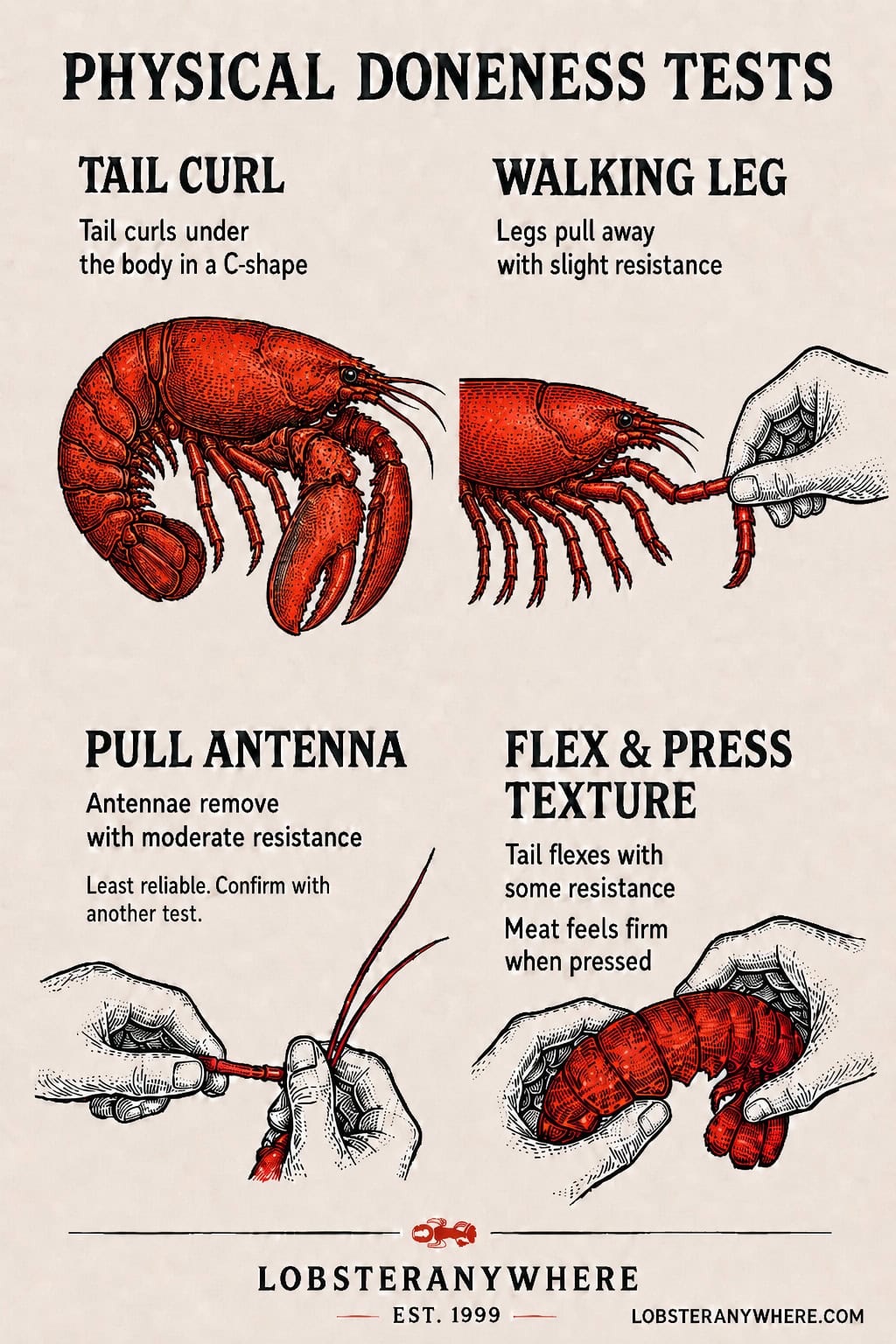
Once you have cooked a few, your hands start telling you as much as your eyes. Three quick checks, none of them a substitute for the thermometer, but all of them useful for a fast read.
The Tail Curl
A done lobster pulls its tail under the body in a loose C, firm but not clenched, and the tail feels full and heavy when you lift it. A tail still lying straight usually needs more time. One clenched up tight, or gone limp, has likely gone past. The catch: curl also depends on how the lobster was handled before it hit the pot, so it is a hint, not a verdict.
The Walking Leg
Take one of the small walking legs and pull. On a done lobster it comes away with a little resistance and a clean break at the joint, with meat showing inside. If it fights you, it needs longer. If it drops off at a touch, you have probably overshot. After enough of these, you feel the give before you think about it.
The Antenna (Least Reliable)
Some cooks pull an antenna and call it by how easily it lets go. It can work, but it is the shakiest of the three and we would not hang a dinner on it. Use it to confirm what the tail and legs already told you, not on its own.
The Flex
Pick the lobster up and give it a gentle bend at the middle. A done one holds its shape and springs back with a little firmness. If the body flops loose and bends too easily, it needs more time. If it feels stiff and locked with no give at all, it has gone too far.
The Press
Press the tail meat with a finger. Done lobster is firm and springs back, like the pad of your palm below the thumb. Meat that stays soft and leaves a dent needs longer. Meat that feels hard and dense has been overcooked. This is the same firm-but-springy you are after with the flex, just read from the meat instead of the whole body.
Overcooked vs Undercooked Lobster: How to Fix Both
What to Do if Lobster is Undercooked
Immediate Action Steps:
- Check the temperature with a thermometer if available
- Return to the cooking vessel immediately
- Add 2-3 minutes of cooking time
- Retest using multiple methods
- Don’t guess – use a thermometer to confirm
Safety First: Never serve undercooked lobster due to food safety risks. If you’re concerned about lobster food poisoning, always err on the side of slightly longer cooking times.
Unsure about the smell or texture?
Salvaging Overcooked Lobster
If Slightly Overcooked:
- Chill immediately in an ice bath to prevent further cooking
- Serve with extra butter or sauce to add moisture
- Slice thinly for a more tender eating experience
If Significantly Overcooked:
- Chop finely for lobster rolls or lobster salad
- Use in cooked applications like lobster mac and cheese
- Make lobster stock from shells and use the meat in bisque
Uneven Cooking Solutions
Prevention:
- Don’t overcrowd the cooking vessel
- Use an appropriately sized pot
- Ensure even heat distribution
- Cook similar-sized lobsters together
If It Happens:
- Remove properly cooked portions
- Continue cooking the undercooked areas
- Use a thermometer to check multiple spots
Doneness by Cooking Method
Steamed
Steam is gentler than boiling, so it is more forgiving and the color shifts a little more slowly. If you are unsure, give it another minute. The lobster anatomy guide shows the best spots to check.
Boiled
Boiling is faster than steaming, so the margin for error is smaller. Test the moment you pull it, and use an ice bath if you are not serving right away. One thing people miss: the water stalls when cold lobsters go in, so bring it back to a full boil before you start the clock.
Grilled
Grilling cooks unevenly, so the shell color is a weaker signal here. Lean on the thermometer in the thickest part of the tail and claw. You will see light char on the exposed meat, the shell goes red on both sides, and the meat pulls from the shell when it is done.
Microwave
Microwaving cooks unevenly and creates hot spots, so check a few places with the thermometer and let it rest a minute before the final read. Full steps are in our microwave lobster guide.
Safe Lobster Cooking Temperature: Food Safety Guide
Minimum Safe Temperatures
FDA Guidelines:
- 145°F minimum for food safety
- 135°F is acceptable for immediate consumption
- Never serve below 135°F internal temperature
High-Risk Factors
Be Extra Cautious When:
- The lobster was previously frozen
- Lobster sat at room temperature before cooking
- Cooking multiple lobsters of different sizes
- Using unfamiliar cooking equipment
Safe Handling After Cooking
Best Practices:
- Serve immediately when possible
- Keep hot above 140°F if holding
- Refrigerate within 2 hours if not consumed
- Use within 2-3 days when refrigerated
For complete storage guidelines, see our lobster storage guide.
Common Doneness Mistakes to Avoid
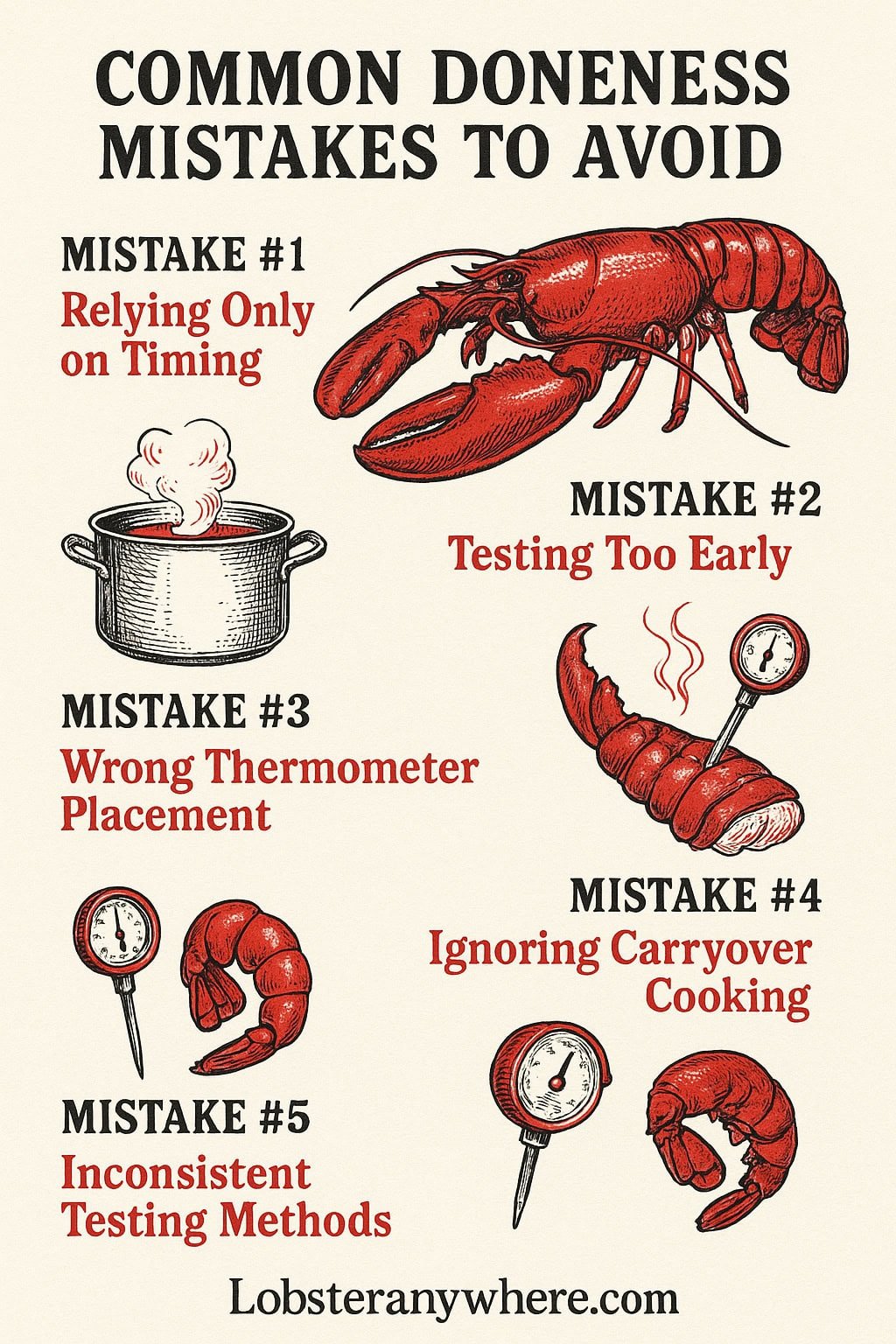
Mistake #1: Relying Only on Timing
Why It Fails: Lobsters vary in density, shell thickness, and meat distribution. Many common beliefs about lobster cooking are actually lobster myths that can lead to overcooking. Solution: Use timing as a guide, doneness tests as confirmation.
Mistake #2: Testing Too Early
Why It Fails: Repeated opening releases heat and extends cooking time. Solution: Wait until the minimum recommended time before the first test.
Mistake #3: Wrong Thermometer Placement
Why It Fails: Shell readings are inaccurate, and thin areas cook faster. Solution: Always test the thickest part of the tail meat from the underside.
Mistake #4: Ignoring Carryover Cooking
Why It Fails: Lobster keeps cooking after it leaves the heat, so pulling it at your target temperature overshoots. Solution: pull at 135°F and let it coast to 140-142°F.
Mistake #5: Inconsistent Testing Methods
Why It Fails: Different methods work better for different situations. Solution: Master multiple techniques and use appropriate combinations.
Mistake #6: Doubling Cooking Time for Double Weight
Why It Fails: Many people will mistakenly boil a two-and-a-half-pound lobster twice as long as a one-and-a-quarter-pound lobster. Cooking time doesn’t scale linearly with weight. Solution: Use the weight of individual lobsters, not the total weight of all lobsters being cooked. Refer to cooking time charts based on individual lobster weights.
Tools for Perfect Doneness Testing
Essential Equipment
Instant-Read Thermometer:
- Digital probe-style preferred
- 2-3 second reading time
- Accurate to ±1°F
- Easy-to-read display
Kitchen Timer:
- Use as a guideline for initial testing
- Multiple timers for multiple lobsters
- Waterproof if using near the cooking area
Helpful Accessories
Ice Bath Setup:
- Large bowl with ice water
- For stopping carryover cooking
- Essential when cooking ahead
Good Lighting:
- Adequate lighting for visual inspection
- Flashlight for outdoor grilling
- Important for color assessment
Serving Perfectly Cooked Lobster
Immediate Service
Optimal Temperature: Serve lobster at 140-145°F for the best flavor and texture.
Presentation Tips:
- Crack shells while the meat is still warm for easier eating
- Provide proper tools (crackers, picks, bibs)
- Serve with appropriate sauces – check our lobster sauce guide
Holding Cooked Lobster
Short-Term Holding (30 minutes or less):
- Keep covered in a warm (not hot) environment
- Avoid heating lamps that continue cooking
- Serve as soon as possible for the best quality
Longer Storage:
- Cool completely before refrigerating
- Store in airtight containers
- Use within 2-3 days
- See our reheating guide for warming leftovers
Getting Lobster Doneness Right
If you take one thing from this, let it be the thermometer. Pull the lobster at 135 to 140°F in the thickest part of the tail, and you will be right far more often than you are wrong. The color and the feel are worth learning, and after a few lobsters you will read them without thinking, but the thermometer is what gets you there while you are still learning.
And when you are not sure, stop a hair short. An underdone lobster goes back in the pot for two minutes, and nobody is the wiser. An overdone one is done for good. That is the whole reason we lean on the numbers instead of the clock: our cooking times by weight get you close, but the reading in the tail is the last word.
Rather skip the guesswork? Our cooked lobster meat is already picked and ready, no thermometer required.
Lobster Doneness FAQ: Common Questions Answered
How do you know when lobster is fully cooked?
Use an instant-read thermometer inserted into the thickest part of the tail meat from the underside. The internal temperature should read 135-140°F. Visually, the shell will be bright red, and the meat will be opaque white throughout with no translucent areas.
What does properly cooked lobster meat look like?
Properly cooked lobster meat is opaque white throughout, firm but tender to the touch, and easily separates from the shell. There should be no translucent, glassy, or gray areas in the meat.
Can you overcook lobster?
Yes, overcooked lobster becomes tough, chewy, and dry. This happens when the internal temperature exceeds 145°F or cooking continues too long. Overcooked lobster meat may appear very white and separated, and will be difficult to chew.
Why is my lobster still translucent after cooking?
Translucent or glassy-looking meat indicates undercooking. Return the lobster to your cooking method immediately and cook for an additional 2-3 minutes, then retest with a thermometer.
How long should lobster rest after cooking?
Let the lobster rest for 3-5 minutes after cooking to allow carryover cooking to finish and make handling easier. The internal temperature will continue to rise 5-10°F during this resting period.
Can you eat slightly undercooked lobster?
No, undercooked lobster should not be consumed due to food safety risks. Always ensure the internal temperature reaches at least 135°F before serving. If in doubt, continue cooking and retest.
Where do you buy the best lobster for these doneness tests?
Start with high-quality Maine lobsters for the most predictable cooking results. Fresh, premium lobsters respond better to doneness testing and provide more consistent results. Learn more about lobster basics to understand what makes quality lobster.
What about the red stuff I see in female lobsters
The red substance is roe (lobster eggs), which is perfectly safe to eat and considered a delicacy by many. Learn more about lobster roe and anatomy in our comprehensive guide.
How do you know if lobster is bad?
Bad lobster has distinct warning signs: strong ammonia or fishy odor, slimy texture on the shell or meat, black spots on the shell, and meat that appears gray, pink, or has dark discoloration. Fresh lobster should smell like the ocean, not fishy. If the lobster was alive before cooking, the tail should curl under the body when cooked – a straight tail can indicate the lobster died before cooking. When in doubt, don’t risk it – spoiled seafood can cause severe food poisoning.
What happens if you eat undercooked lobster?
Eating undercooked lobster can cause food poisoning from harmful bacteria like Vibrio, Salmonella, or E. coli that survive at temperatures below 135°F. Symptoms may include nausea, vomiting, diarrhea, stomach cramps, and fever, typically appearing within 2-24 hours. Undercooked lobster meat appears translucent or glassy rather than opaque white. Always ensure lobster reaches an internal temperature of at least 135°F to kill harmful bacteria and make it safe to eat.
How to tell if frozen lobster is cooked?
Pre-cooked frozen lobster will have bright red shells and opaque white meat throughout. The meat should be firm, not mushy, and easily separate from the shell. If you’re cooking frozen raw lobster, use the same doneness tests: internal temperature of 135-140°F, bright red shell, and opaque white meat. Always thaw frozen lobster completely in the refrigerator for 12-24 hours before cooking – never cook from frozen as this causes uneven results.
Should lobster tail curl when cooked?
Yes, a properly cooked lobster tail will curl under the body in a C-shape. This curling happens as the muscle proteins contract during cooking. A completely straight tail often indicates undercooking, while a tightly curled tail may suggest overcooking. However, tail curl can be affected by how the lobster was handled before cooking, so always confirm doneness with internal temperature (135-140°F) and visual cues like opaque white meat throughout.
Can you cook a dead lobster?
You should not cook a lobster that was dead before cooking. A dead lobster begins to decompose quickly, developing harmful bacteria and toxins that cooking cannot eliminate. Signs of a lobster that died before cooking include: a straight tail that doesn’t curl when cooked, a strong ammonia smell, a mushy meat texture, and a discolored shell. Live lobsters should be cooked the same day of purchase, or within 24 hours if properly stored. If you’re unsure whether a lobster was alive before cooking, don’t risk it.
How long does cooked lobster last in the refrigerator?
Properly cooked and stored lobster lasts 2-3 days in the refrigerator when kept at 40°F or below. Store cooked lobster in airtight containers or tightly wrapped in plastic wrap or aluminum foil. The meat should maintain its firm texture and ocean-fresh smell. If cooked lobster develops a fishy odor, slimy texture, or off-color appearance, discard it immediately. For more extended storage, cooked lobster can be frozen for up to 3 months, though the texture may become slightly less tender. See our tips on how to freeze lobster.
What’s the difference between hard shell and soft shell lobster doneness?
Hard shell lobsters (fall/winter) have thick, difficult-to-crack shells and require 1-2 extra minutes of cooking time. Their meat fills the shell and is more forgiving if slightly overcooked. Soft shell lobsters (summer) have thin, flexible shells from recent molting and cook faster – reduce cooking time by 1 minute and watch carefully to avoid overcooking. Both types reach the same internal temperature (135-140°F) for doneness, but soft shell lobsters require more careful timing due to their delicate nature.
What Temperature should lobster be cooked at?
The ideal internal temperature for cooked lobster is 135-140°F. The FDA recommends 145°F for food safety, but most chefs prefer 135-140°F for optimal texture and flavor.
Why is my cooked lobster tough and chewy?
Tough, chewy lobster is almost always the result of overcooking. When lobster reaches temperatures above 145°F, the proteins contract too much and squeeze out moisture, creating a rubbery texture. To avoid tough lobster, remove it from the heat when the internal temperature reaches 135°F, use proper timing, and consider using an ice bath to stop the cooking process.