
Is it possible to capture the sensory experience of homemade lobster bisque using mere mortal words? Nope.
The buttery lobster flavor imparted by the shells blends seamlessly with the savory vegetables, cream, wine, and cognac. It’s a complex, ever-fascinating soup you just have to experience for yourself. There’s no way around it!

Let’s get bisque’d-up in this 101 guide and walk through topics like…
- Bisque’s contentious definition… is it just soup?
- The fundamentals of making lobster bisque
- 4 of the best bisque recipes we’ve come across
But be warned: this guide will be mouthwatering.
What Exactly is Lobster Bisque? A Quick, No-Frills Definition
Let’s get on the same page about what lobster bisque is and isn’t.
Lobster bisque is a delicious, creamy soup that’s bursting with the savory, butter flavor of lobster. Here’s what you can generally expect in a well-made bisque:
- Lobster Shells — The core flavoring ingredient (shrimp and other crustaceans can work too). Most bisques do not call for the meat itself, just the shells.
- Seasoning — Primarily based around whole vegetables, like celery, carrots, onions, and tomatoes. Most recipes also call for a hint of spice, like cayenne or clove.
- Liquid — Bisque recipes aren’t shy about liquids: cream or milk, broth, clam juice, white wine, and often a bit of brandy are used to create a complex, fascinating flavor.
- Thickener — Most recipes call for a quick butter-flour roux to thicken the soup, though some use cornstarch, which is slightly simpler.
Most recipes require you to dice the vegetables into very small pieces, so they sort of melt together as the stew simmers.

Is Bisque Just a Fancy Word for Soup?
The term “soup” and its many historical variations have been used for hundreds of years across Europe. It generally refers to any broth-based bowl of food (yup, quite vague). Bisque, on the other hand, has a concrete beginning in 17th-century France. We’ll get more into the history of the word later, but around 1640, it was translated as “crayfish soup”.
Yes, bisque is essentially a fancy way of saying soup, though in modern English it more specifically refers to a thick, smooth soup based on crustaceans such as crayfish, shrimp, or lobster.
Lobster Chowder vs Lobster Bisque
Chowders are a category of seafood stews usually thickened with cream or milk. Most of the ingredients—fish, clams, veggies—float in the thick liquid as small chunks (not blended). For this reason alone, lobster chowder is not the same as a lobster bisque. Lobster chowder is thick and very chunky. Lobster bisque is thick and mostly smooth.
For more information on chowders, check this article out: Seafood Chowder 101: A Breakdown Of Recipes, Types, And History.
A Brief History of Lobster Bisque
Lobsters have been consumed by humans since prehistoric times, and culinary evidence indicates that the ancient Greeks and Romans cooked lobsters in ways similar to how we do today.
- Related: History of Maine Lobster
While lobster was highly esteemed by the British, American colonists initially weren’t fond of the crustacean, despite its abundance in New England. It wasn’t until the mid 19th century that Americans developed a taste for lobsters, when chefs realized they tasted much better cooked alive than dead.
| Pro Tip: Here’s how to kill a lobster humanely (without feeling bad) so you can get the best flavors and textures possible. |
|---|
Soon afterwards, lobster became a very stylish, high-class ingredient. Many food lovers even considered it an aphrodisiac.
The Origins of the Word Bisque: French or Spanish?
Etymologically, the word bisque suggests a connection to Vizcaya, a Spanish province that borders the Bay of Biscay. The Bay of Biscay borders the western regions of Spain and France and is, not so coincidentally, full of shellfish.
The term is also likely referring to the way the lobsters are ‘bis cuites’ or cooked twice during the soup-making process. They are lightly sautéed in their shells, simmered in a wine mixture with other aromatic ingredients, and then strained. Next, the cream is added, and voila, a delicious bisque! Some historians have deemed the original version of lobster bisque a fisherman’s food, due to the use of crushed shells. It was designed to extract every last bit of flavor from the crustacean so nothing was wasted.
Also Read: Lobster Prices: How Much Does Lobster Really Cost?
Interestingly enough, the word bisque had an entirely different culinary meaning in 16th-century France. It used to refer to a game bird, such as quail, that was pureed into a soup and served in high-end settings. The recipe evolved during its immigration to America when crustaceans were substituted as the primary ingredient. In the 17th century, a version of bisque came into existence that is more similar to the modern-day soup, using the crushed shells of the crustacean.
Back then, it was a thicker mixture known as pottage, and the main ingredient was crayfish (aka the American rock lobster) rather than your typical lobster. Lobsters and other crustaceans were overabundant in New England and were therefore more commonly regarded as a lower-class food. Only later did lobster and lobster bisque gain the culinary status they have today.
How Modern Lobster Bisque Has Evolved in America
Many modern versions of bisque served at steakhouses contain very little lobster and are finished with brandy, sherry, and cognac. In some places, the recipe for lobster bisque is more like a broth, and the lobster takes the form of a dumpling. In other regions, lobster bisque is served with zucchini and julienne carrots!
New England seafood maven and author of Chowderland, Brooke Donjny, says lobster bisque can also be made without the lobster bodies and instead with just lobster meat. Just as New England has a whole variety of lobster boats, there are myriad ways to make a lobster bisque.
Also Read: Just add Booze to the Lobster Pot: Cooking with Wine, Beer and Spirits
The Fundamentals of How to Make Lobster Bisque
It is possible to find lobster bisque in cans, including frozen versions that only require boiling water to cook. However, none of these options beat the thrill of preparing lobster bisque with your own ingredients and fresh lobster.
The process of making this soup typically takes 1-2 hours. If you’re going to make a great lobster bisque, you’ll want to have some time on your hands, but the extra work is well worth it for the end result! Fresh lobster is preferred by most people, but frozen and pre-cooked lobsters can be just as tasty.
| If you’d prefer to buy pre-cooked and frozen lobster meat to save time, just make sure you’re buying from a vendor who is very carefully packaging and shipping—here’s what to look for. |
|---|
One of the best things about lobster bisque is its versatility. Although there are a few specific ingredients that give it its signature taste, you (the chef) can have fun trying out different ingredient proportions and cooking times.
Collecting Your Lobster Bisque Ingredients
While lobster bisque purists say no to vegetables, we find adding them to be a perfectly acceptable and delicious move. The veggies most commonly used are onions, celery, and tomatoes. Unlike the recipe for New England Clam Chowder, another northeastern favorite, lobster bisque does not contain potatoes.
Most bisque recipes typically involve this set of ingredients:
- 2-3 medium Maine lobsters
- Some clam juice
- Chicken stock
- Cognac (yes, you read that correctly!)
- Celery stalks
- Sliced onion
- Chopped carrots
- Aromatics: cloves, bay leaf, and some peppercorns.
The ingredients are not added all at once, but in stages in the saucepan, before blending the cooked mixture to the desired smoothness and viscosity (see the recipe for precise timelines). White rice is often used as a thickener, but this method can yield clumps, so many chefs prefer flour.
Lobster Bisque Ingredients: Lobster
If you are using a recipe that calls for live lobsters, the lobsters are usually boiled in a pot. As you’ll see, most recipes do not use the actual lobster meat—just the shells. However, if you’d like to add lobster tail to your bisque for a bolder flavor, it must be pureed or finely chopped.
You can cook the empty lobster shells in butter to draw out more flavor and create a richer soup. Flatten the shells before cooking to increase the surface area. If you puree some of the meat right into your bisque, get ready for a deeply luxurious and satisfying soup!
Here’s our complete guide to cooking lobster.
The 4 Best Lobster Bisque Recipes We’ve Come Across
Now that you’ve seen the fundamental process of making lobster bisque, let’s walk through a few traditional recipes we love here in the Northeast.
Recipe: Classic Maine Homemade Lobster Bisque
If you’re after traditional flair and flavor, you can’t beat this classic recipe. Using all the classic ingredients and a tried-and-true cooking method, this homemade lobster bisque recipe is the go-to for any aspiring chef who wants to do it the Maine way.
Recipe: Gluten Free Lobster Bisque from Scratch
Desperate for a bowl of bisque, but can’t have all that gluten from the flour? No worries, this recipe is a worthy gluten-free alternative that’s still rich and delicious, and most of the ingredients and techniques are intact from the original!
Recipe: Real Lazy Lobster Bisque
Not feeling 1-2 hours in the kitchen? We’ve got you covered. This easy recipe takes less than 20 minutes to make and uses frozen lobster meat instead of shells for a rapid soup.
| Warning: frozen lobster meat can be exceptional, but it’s not all equal. We suggest being very, very picky about who you buy meat from: buy it freshly-frozen, carefully shipped, and from Maine, of course! |
|---|
Recipe: Julia Child’s Famous Lobster Bisque
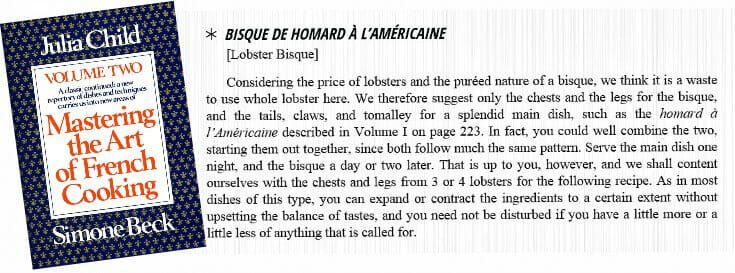
Julia Child’s famous lobster bisque recipe recommends using only the claws and legs of the lobsters, then saving the tails for use in another main dish.
Remember how some recipes call for cognac? Julia Child recommends a flamboyant approach: add cognac or sherry, then light the entire pan on fire as you continue to sauté. Talk about entertaining your guests! She claims this enhances the soup’s flavor.
She then removes the best pieces of lobster from the simmering lobster-and-vegetable mixture and strains the juices into a blender. The lobster meat and rice are then added, and the mixture is pureed to form the final bisque.
Ready for Your Next Bowl of Butter Lobster Bisque?
If the name hasn’t given it away, we’re mega lobster fanatics here at Lobster Anywhere.
That’s why we don’t take a single shortcut with our chef-made lobster bisque—prepared by New England chefs, thoughtfully frozen and packaged, and delivered to your doorstep for a 5-minute luxury dinner.
It’s the easiest way to enjoy classic Maine Lobster Bisque, made by people who actually live in Maine, without having to spend hours in the kitchen
Grab your next bowl of lobster bisque here.
Now all you need is some fresh French bread, a glass of red wine, and someone to share in enjoying the delights of this delicious dish!