
Whether you’re planning lobster rolls for a crowd or trying to figure out the difference between TCK and all-tail meat, this guide covers the basics — types, yield, how much to order, how to store it, and which cut works best for which dish.
At a Glance
- Best all-purpose option: TCK (tail, claw & knuckle)
- Best for presentation: all-tail or shucked tails
- Best for hot dishes: raw claw and knuckle
- 1 lb: makes about 3–5 lobster rolls
- After thawing: use within 1–2 days
When possible, look for the species name Homarus americanus on the label. That helps distinguish true Atlantic lobster from lower-cost substitutes or imitation seafood sometimes sold as lobster.
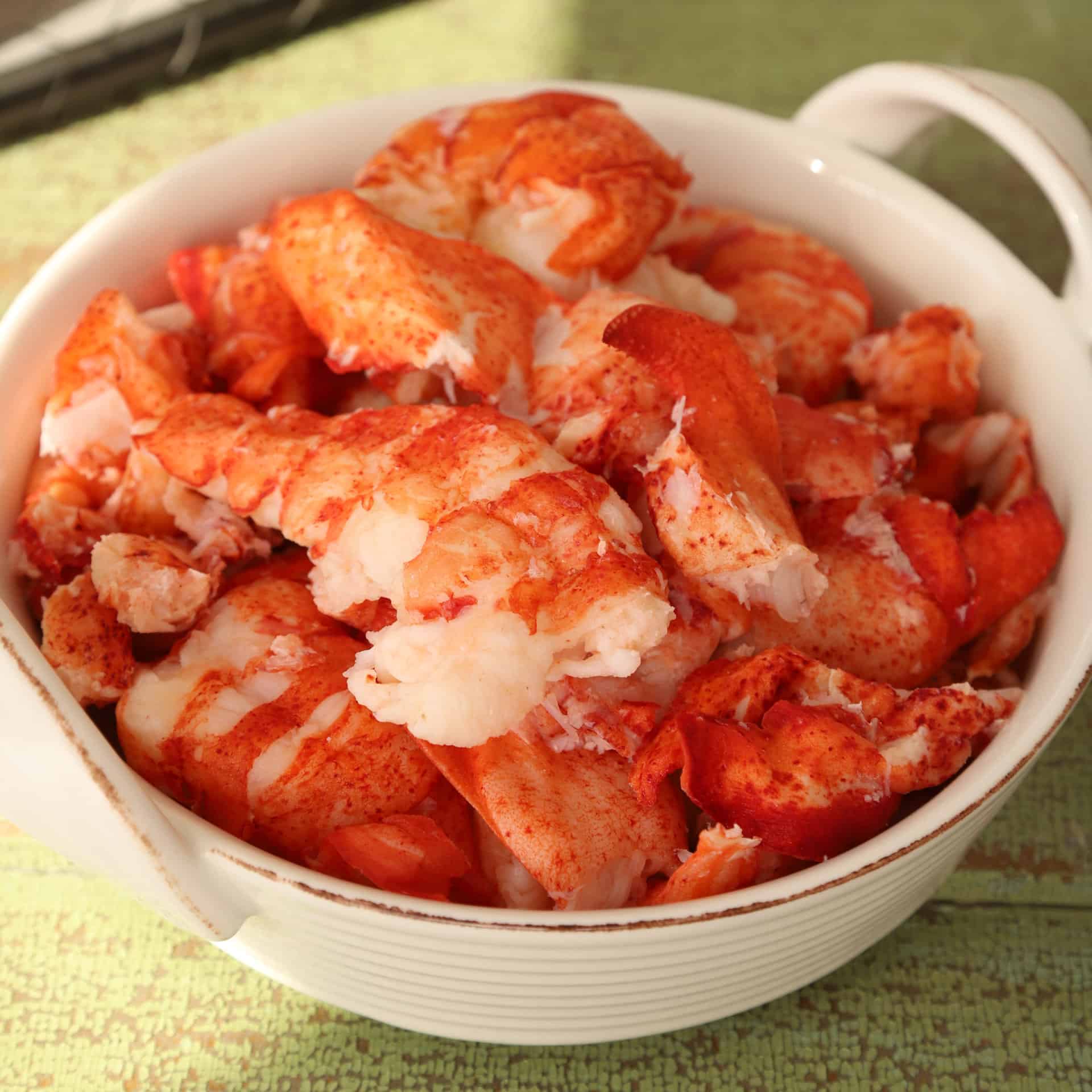
Where Does Your Lobster Meat Come From?
Maine lobster meat comes from the American lobster, Homarus americanus, a cold-water species found in the northwest Atlantic. It’s prized for its firm texture, clean flavor, and sweet finish.
When buying lobster meat, it helps to know what format you’re getting — TCK, all-tail, claw and knuckle, or shucked tail meat — because each works best for different dishes.
How is Lobster Meat Processed?
Lobster meat is typically packed in a few common formats:
- TCK — Tail, Claw & Knuckle (the most common all-purpose blend)
- All-Tail — Only the tail section
- CK — Claw & Knuckle only (often available raw)
- Minced or broken meat — Lower-grade pieces used for soups, bisque, and stews
- CKL— Claw, Knuckle, and Leg meat, often used in salads or value-priced blends
Some raw, shell-free products, especially shucked tail meat, are made using high-pressure processing (HPP/UHP), which separates the meat from the shell without heat.
Why We Only Offer Dry-Packed Lobster Meat
At LobsterAnywhere, we only offer dry-packed lobster meat. That means the meat is packed without added brine or excess liquid, so you get pure lobster flavor, firmer texture, and more usable meat in every package. For lobster rolls especially, it makes a noticeable difference — brine-packed meat can make the bun soggy and the flavor saltier than it should be. For salads, pasta, and other simple dishes where lobster is the star, dry-packed is the right call. Brine-packed meat may look less expensive upfront, but added liquid reduces true yield — you’re paying for saltwater, not lobster.
In short: with dry-packed lobster meat, you are paying for lobster — not added liquid.
| Feature | Dry-Packed | Brine-Packed |
|---|---|---|
| Packing Method | Packed without added liquid | Packed in saltwater or preservative solution |
| Texture | Firm, meaty, clean bite | Softer, sometimes waterlogged |
| Flavor | Sweet, clean lobster flavor | Saltier, sometimes less clean-tasting |
| Yield | More of the package is actual lobster meat | Lobster rolls, salads, and pasta are served on its own |
| Best For | Lobster rolls, salads, and pasta are served on their own | Soups, stews, chowder, mac and cheese |
Types of Lobster Meat Explained
Tail, Claw & Knuckle (TCK)
TCK is a blend of all three sections. It’s the most versatile option and the most common format for Maine lobster meat. The pieces vary in size and shape, which makes it ideal for dishes where the meat gets folded into something else: lobster rolls, pasta, mac and cheese, chowder, lobster pie.
All-Tail Meat
Only the tail section — no claw or knuckle meat mixed in. Tail meat is firmer and more uniform in size, making it the better choice when presentation matters or when you want larger, distinct pieces on the plate. It’s also the right call for butter-poached or pan-seared preparations where the meat is the centerpiece. Some lobster lovers love the tails, while others love the claws. Read more about the debate and the differences between the tail and claw meat.
Claw & Knuckle Meat (Raw)
Claw and knuckle meat without the tail is available raw, making it the right choice if you plan to cook the lobster meat yourself. Raw claw and knuckle meat absorbs flavors well and stays tender through heat — a Connecticut-style lobster roll, a sauté, or a bisque base.
Shucked Tail Meat
The full tail section is removed from the shell and sold individually — five shucked tails per pound, typically. These are distinct whole-tail portions, not blended meat, making them the closest thing to a whole lobster tail without the shell. Best for grilling, broiling, or butter poaching when you want a whole-tail presentation.
Why Is Lobster Meat Sold Frozen If It’s Fresh?
It’s a fair question.
Live Maine lobsters are caught, then either cooked and picked or processed raw, depending on the product. Because lobster meat is highly perishable, freezing makes shipping possible while preserving quality.
Some raw, shell-free products, especially shucked tail meat, are produced using high-pressure processing (HPP/UHP), which separates the meat from the shell without heat. After that, the meat is vacuum-packed and frozen for shipping. When thawed properly, high-quality frozen lobster meat can retain excellent texture and flavor.
How Much Lobster Meat Should I Buy?
It takes several whole lobsters to yield a single pound of picked meat, which is why it’s priced as a premium product. As a rough kitchen guide, 1 pound of lobster meat is about 2 cups. Yield varies by size and shell condition: hard-shell lobsters generally yield more meat than soft-shell lobsters of the same size, and the meat is firmer as well. A good rule of thumb is that 1 pound of lobster meat makes about 3–5 rolls, depending on portion size. Roughly 5 to 6 pounds of live lobster are needed to yield 1 pound of cleaned meat.
Here’s a practical buying guide for common dishes:
| 1 lb makes about 4–5 rolls.” | Per Serving | Notes |
| Lobster roll (generous) | 4–5 oz | 1 lb makes about 3–4 rolls |
| Lobster roll (standard) | 3–3.5 oz | 1 lb makes about 4–5 rolls. |
| Lobster mac & cheese | 2–3 oz | Rich dish; meat goes further |
| Lobster pasta | 2–3 oz | Especially when tossed with a cream or butter sauce |
| Lobster salad | 3–4 oz | Scales with how far you stretch it |
| Lobster pie | 3–4 oz | Classic New England preparation |
| Lobster bisque or chowder | 2 oz | Meat is a flavoring component, not the base |
| Appetizer portions | 1.5–2 oz | Per person |
A 2-lb pack of TCK meat serves approximately 8 people for lobster rolls or 10–12 for a pasta dish where lobster shares the plate with other ingredients.
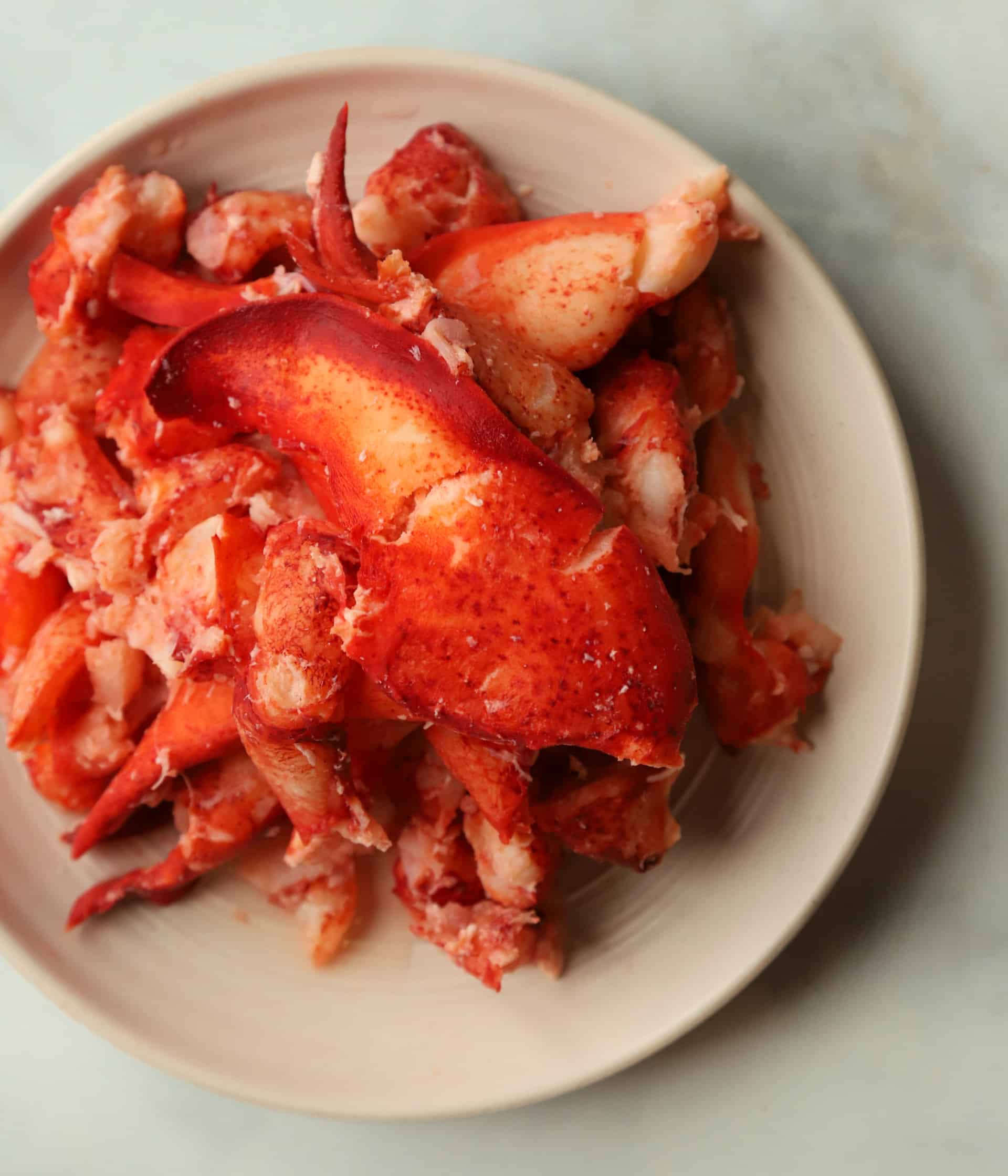
Best Lobster Meat for Different Dishes
Classic cold lobster rolls: Cooked TCK or all-tail meat. Cold rolls are about the lobster itself — you want it ready to eat, chilled, dressed simply with mayo.
Hot Connecticut-style rolls: Raw claw and knuckle meat, sautéed in butter. Raw meat takes on butter better and stays more tender through heat than reheated cooked meat.
Pasta and salads: TCK works well. The mix of textures integrates naturally into sauced dishes and salads where uniformity doesn’t matter.
Lobster mac and cheese or pie: TCK again — quantity and blend matter more than piece size.
Butter-poached or pan-seared presentations: All-tail meat or shucked tail meat. You want larger pieces that hold their shape on the plate. See our recipe for how to butter-poach lobster tails.
Lobster bisque or chowder: TCK is fine, but raw claw and knuckle meat is a good choice if you want the meat to cook into the broth and build flavor. Minced or broken lobster meat can also work well in soups, bisque, stews, and fillings.
Cooking Lobster Meat
Raw lobster meat cooks quickly — watch it closely. For claw and knuckle meat, a simple butter sauté over medium heat takes just 2–3 minutes. Tail meat can be left whole, halved lengthwise, or sliced into medallions, depending on the dish. In either case, pull it from the heat as soon as the meat turns opaque and firm. Overcooked lobster gets rubbery fast.
For detailed techniques on boiling and steaming, see our lobster cooking guide. If you’re cooking lobster meat to save for later or use in another dish, blanching is the right method — it partially cooks the meat, locks in its texture, and makes it easy to finish in a roll, with pasta, or sautéed without overcooking.
How to Thaw, Store, and Use Lobster Meat
Thawing
The best method is slow: move the sealed bag from the freezer to the refrigerator 12 to 24 hours before you plan to use it. If you’re short on time, submerge the sealed bag in a bowl of cold water for 30–60 minutes. Never thaw in warm water, at room temperature, or in the microwave.
After Thawing
Use thawed lobster meat within 1–2 days. For opened or fresh refrigerated lobster meat, plan on about 2–3 days at most. Do not refreeze after thawing.
Freezer Life
Keep frozen in the original packaging until ready to use, and follow the package guidance for freezer life. As a general rule, home-frozen, sealed lobster meat is best used within 3–4 months, while commercially processed frozen products may last longer, depending on packaging and handling.
Cooked vs. Raw: Which to Use When
If your recipe involves heating the meat — hot rolls, pasta, mac and cheese, or a sauté — raw meat often yields the best results because it finishes cooking in the dish and can stay especially tender. If you’re eating the meat cold or using it as the finished product — cold lobster roll, salad, chilled appetizer — cooked meat is the right call.
What Good Lobster Meat Looks Like
Properly cooked lobster meat should look opaque and firm, with a fresh, clean smell. Avoid meat that smells strongly of ammonia, has excessive liquid in the bag, or looks mushy or dried out.
Buyer’s Checklist for Lobster Meat
When you’re shopping for lobster meat, look for a few simple quality signals:
- Origin: Look for Maine or Atlantic Canada
- Species: If possible, confirm Homarus americanus
- Scent: It should smell clean and fresh, not sharply fishy or like ammonia
- Liquid in the bag: A little is normal, but excessive purge means you may be paying for water weight
- Color: Look for opaque white meat with natural red highlights on cooked sections
These are practical checks that can help you spot premium-quality lobster meat and avoid disappointment.
Is Lobster Meat Good for You?
Yes — it’s lean, high in protein, and a solid source of zinc, phosphorus, and selenium. It’s lower in saturated fat than many other proteins and contains omega-3 fatty acids. The cholesterol numbers look a lot better when you’re not adding a stick of butter, though no one’s going to stop you.
For a full breakdown, see our lobster nutrition facts page.
Common Questions About Lobster Meat
Related Lobster Meat Products
Looking for a specific type of lobster meat? Start here:
My order of lobster meat and lobster tail meat without the shell was fantastic!
Fresh, delicious, tender and sweet.
We love Lobster Anywhere and have always been happy with our orders, like the live lobsters!
Fast delivery and great service too!
You have caught us in your lobster trap forever!